

Arterial Aneurysm Treatment in India: Comprehensive Care for a Life-Threatening Condition
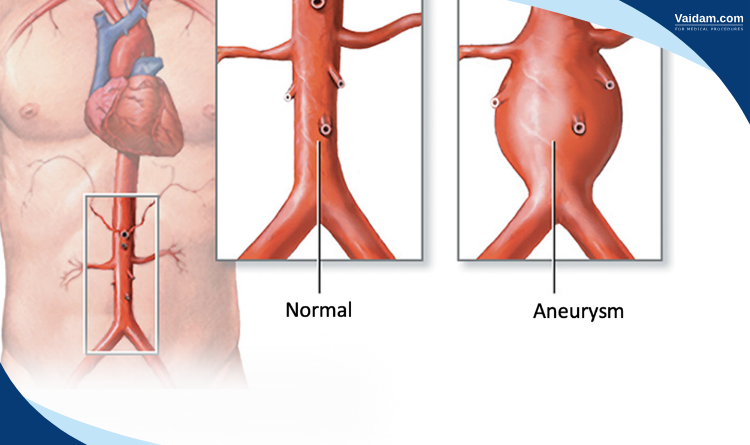
Arterial aneurysms are a serious medical condition where the wall of an artery weakens, forming a bulge. If left untreated, these bulges can rupture, leading to life-threatening health issues. The most common types of arterial aneurysms are abdominal aortic aneurysms (AAA) and cerebral aneurysms.
Globally, over 3 million people live with arterial aneurysms, and 2-3% of people over the age of 50 are at risk for abdominal aortic aneurysms. Moreover, 1 in 50 people are at risk for cerebral aneurysms during their lifetime.
Advances in medical technology have made treating arterial aneurysms more effective, and India has become a preferred destination for treatment due to the following benefits:
- Availability of Minimally Invasive Aneurysm Surgery in India, such as Endovascular Aneurysm Repair (EVAR), Aneurysm Stenting, and Coiling
- Higher success rates with modern aneurysm procedures
- Non-invasive options for high-risk patients who can’t undergo surgery
- Significant cost savings of 60-80% compared to the US, UK, and Canada
- Experienced surgeons with expertise in complex aneurysm surgeries
- Top hospitals equipped with modern facilities and cutting-edge technology
- Advanced Aneurysm Treatment in India using the latest technology and procedures
What is an Arterial Aneurysm?
An arterial aneurysm is a bulge or enlargement in the wall of an artery. It occurs when the artery's wall becomes weakened, causing blood to flow into the bulging area. These bulges can occur in several parts of the body, including the aorta, brain, neck, legs, and lungs.
If the aneurysm grows too large or ruptures, it can cause life-threatening internal bleeding and other serious complications.
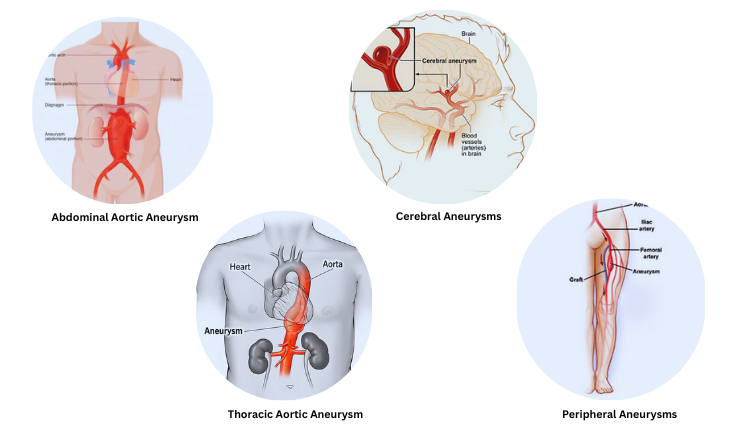
Arterial aneurysms are generally classified into two types:
- Abdominal Aortic Aneurysm (AAA): This occurs in the abdomen.
- Thoracic Aortic Aneurysm (TAA): This occurs in the chest area.
Other types include:
- Cerebral Aneurysms: These form in the brain.
- Peripheral Aneurysms: These can occur in other blood vessels, like those in the legs.
Interesting Facts About Arterial Aneurysms
- Nearly 75% of abdominal aortic aneurysms show no symptoms until they rupture.
- Men are four times more likely to develop aneurysms than women, but women are at a higher risk of rupture.
- Up to 20% of aneurysm cases have a family history, making genetic screening crucial for early detection.
Symptoms of Arterial Aneurysms
Arterial aneurysms may not cause any symptoms, especially when they are small. However, as they grow larger, they may present various symptoms depending on their location. Common symptoms include:
- Chest, abdomen, or back pain
- Difficulty breathing or swallowing (for thoracic aneurysms)
- A pulsating feeling near the belly button (for abdominal aneurysms)
- Sudden severe headache or dizziness (for cerebral aneurysms)
- Nausea or vomiting
In some cases, an aneurysm may rupture, causing sudden, severe pain, internal bleeding, and potentially death if not treated immediately.
Treatment Options for Arterial Aneurysms
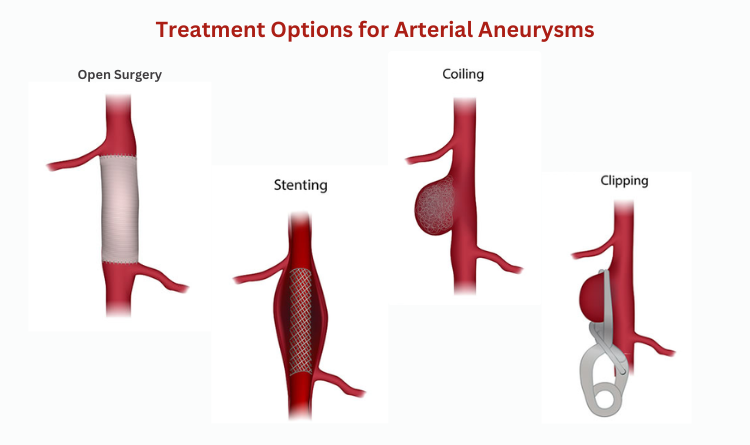
Treatment for arterial aneurysms varies depending on the aneurysm's size, location, and whether it's at risk of rupture. India offers several advanced treatments for arterial aneurysms, including surgical and non-surgical options. Some of the most common treatment options available are:
1. Open Surgery:
- Removes the aneurysm and replaces the artery with a graft
- Requires a large incision
- Used for larger aneurysms or when other methods aren't suitable
2. Endovascular Aneurysm Repair (EVAR):
- Minimally invasive treatment for abdominal and thoracic aneurysms
- A stent graft is inserted through a small groyne incision
- Bypasses and strengthens the artery, reducing rupture risk
- Preferred in India due to high success rate and quicker recovery
3. Aneurysm Stenting and Coiling:
- Primarily used for cerebral aneurysms
- A catheter is inserted through blood vessels to reach the aneurysm
- Tiny coils are placed to seal off the aneurysm, preventing rupture
4. Minimally Invasive Aneurysm Surgery:
- It uses smaller incisions and advanced technology
- Offers reduced pain, lower risks, and faster recovery compared to open surgery
Preparing for Arterial Aneurysm Treatment: Before, During and After the Treatment
Before the Procedure
Before undergoing any of the above procedures, certain preparations are necessary:
- Pre-Surgery Tests: You will undergo tests such as CT scans or MRIs to assess the aneurysm's size and location. Blood tests will also be done to check for any underlying health issues.
- Consultation: You will meet with your surgeon to discuss the risks of the surgery, the procedure itself, and what to expect during recovery.
During the Procedure
Depending on the treatment chosen, the procedure may involve the following:
- Anaesthesia: You will be given general anaesthesia to ensure comfort and pain relief during the procedure.
- Imaging Guidance: Surgeons use imaging techniques, like fluoroscopy or CT scans, to guide them during the procedure.
- EVAR: A stent graft is inserted through a small incision to reinforce the artery.
- Stenting and Coiling: A catheter is used to insert coils into the aneurysm to seal it off.
- Open Surgery: Involves replacing the weakened section of the artery with a synthetic graft.
The duration of the procedure depends on the complexity but typically lasts between 2 to 4 hours.
After the Procedure
After the surgery, patients are moved to a recovery room where their vital signs will be closely monitored. The duration of your hospital stay will depend on the type of procedure:
- Minimally invasive treatments: Hospital stay is typically 1-3 days
- Open surgery: Hospitalisation usually lasts 5-7 days
Recovery times vary:
- Minimally invasive surgeries: Patients generally recover in about 2-4 weeks
- Open surgery: Full recovery can take 6-12 weeks
During recovery, patients are advised to avoid heavy lifting and strenuous activities. Regular follow-up visits and imaging tests will help monitor the treatment's success and detect any complications.
Benefits of Arterial Aneurysm Treatment
Arterial aneurysm treatment has several benefits:
- Lowers the risk of a dangerous rupture
- Helps blood flow normally, avoiding strokes or organ damage
- Relieves pain, pressure, and swelling from the aneurysm
- Increases chances of survival by preventing serious issues
- Reduces risks like blood clots or narrowing of blood vessels
- Supports better long-term blood vessel health and lowers the risk of more aneurysms
Risks and Complications
Though the treatment for arterial aneurysms in India is safe, there are some risks involved, such as:
- Infection at the surgical site
- Bleeding
- Recurrent aneurysms
- Complications from anaesthesia
Success Rate of Arterial Aneurysm Treatment in India
The success rate of arterial aneurysm treatment in India is approximately 90-95%, with fewer complications.
Arterial Aneurysms Treatment Cost in India
The arterial aneurysm treatment cost in India is significantly lower than in countries like the US, UK, and Canada. Depending on the diagnostic tests, type of procedure, hospital stay, surgeon's fees, and post-surgery care, treatment costs range from $10,000 to $12,000.
Top Doctors for Arterial Aneurysm Treatment in India
India has many experienced vascular surgeons who specialise in treating arterial aneurysms. Some of the best doctors for arterial aneurysm treatment in India include:
- Dr. Rakesh Mahajan: Renowned for his expertise in EVAR and aneurysm stenting.
- Dr. Rajiv Parakh: A specialist in vascular surgery with extensive experience.
- Dr. Balaji V: Known for advanced aneurysm treatment techniques.
For more information on these doctors, you can visit their profiles via Vaidam Health.
Top Hospitals for Arterial Aneurysm Treatment in India
Several hospitals in India offer excellent care for arterial aneurysms. However, some of the best hospitals for arterial aneurysm treatment in India include:
- Fortis Escorts Heart Institute, New Delhi
- Medanta – The Medicity, Gurgaon
- Apollo Hospital, Chennai
- Max Super Specialty Hospital, Delhi
These hospitals are equipped with state-of-the-art technology and experienced surgeons specialising in arterial aneurysm treatment in India.
How to Prepare for Arterial Aneurysm Treatment in India
Preparing for arterial aneurysm treatment requires careful planning and consultation with your healthcare team. Here's a guide to help you get ready:
1. Medical Records:
- Bring reports of your medical condition, including diagnostic tests, imaging results, and any previous treatments or surgeries.
- List any current medications, including dosage and frequency.
2. Referral Letter:
-
Get a letter from your current doctor recommending the arterial aneurysm treatment, summarising your condition and reasons for the procedure.
3. Passport and Visa:
-
Ensure your passport is valid for at least 6 months (If necessary, apply for a medical visa with supporting documents from the hospital).
4. Health Insurance Documents:
-
If your insurance covers the procedure, ensure you have all the necessary details and confirmation for treatment.
At Vaidam Health, we collaborate with top hospitals across India to make your treatment journey smoother. We offer:
- Personalised recommendations for arterial aneurysm treatment
- Assistance in finding leading vascular specialists
- Comprehensive treatment guidance and custom packages
- Efficient appointment scheduling and visa assistance
- Accommodation and translation services
Our goal is to provide a stress-free experience for you throughout the procedure and recovery.
Now Take Control of Your Arterial Aneurysms with Expert Care in India!
Choosing the right treatment for an arterial aneurysm is crucial for preventing complications and ensuring a good quality of life. India offers advanced treatment options, experienced surgeons, and modern facilities at significantly lower costs than many countries.
Whether it's minimally invasive EVAR or open surgery, the focus remains on patient safety and successful outcomes. Patients can effectively manage their conditions by opting for early diagnosis, following the doctor's advice, and maintaining a healthy lifestyle.
With the support of medical tourism services like Vaidam Health, planning treatment in India becomes seamless, prioritising comfort, care, and recovery.
Frequently Asked Questions About Arterial Aneurysms Treatment
1. What is the best treatment for an aneurysm?
The best treatment depends on the aneurysm's size and location, and it can range from monitoring to surgery (open or endovascular repair).
2. How much does aneurysm surgery cost in India?
Aneurysm surgery in India costs between ₹2,50,000 and ₹7,00,000, depending on the hospital and procedure.
3. How to shrink an aneurysm naturally?
Aneurysms cannot be shrunk naturally, but a healthy lifestyle may help slow their growth.
4. Can aneurysms be cured without surgery?
Small aneurysms can sometimes be managed without surgery, but large ones usually need treatment.
5. How do you stop an aneurysm from growing?
Keeping blood pressure under control and avoiding smoking can help stop it from growing.
Written by

Suryani Dutta
Vaidam Health · Updated 05 Dec 2024
Suryani Dutta is an experienced healthcare content writer with 4+ years of expertise creating evidence-based, SEO-driven content for the healthcare industry. She has developed 5,000+ healthcare content assets, including blogs, website content, doctor and hospital profiles, treatment pages, social media campaigns, and video scripts.
At Vaidam Health, Suryani creates high-quality content on advanced medical treatments, surgical procedures, hospital guides, doctor profiles, and patient education. Her work combines in-depth research with clear, reader-friendly writing to make complex medical information accessible to a global audience.
Beyond writing, Suryani contributes to content strategy, editorial planning, website optimisation, and digital healthcare campaigns. She has helped strengthen the online presence of healthcare brands by producing accurate, engaging, and search-optimised content.
Passionate about healthcare communication, Suryani is committed to creating trustworthy content that empowers patients, supports informed medical decisions, and highlights the latest advancements in global healthcare.
Outside of work, she enjoys exploring emerging medical innovations, following healthcare trends, and creating educational content that makes a meaningful impact.
Content meets the Vaidam Policy and is medically reviewed
Medically reviewed by
Dr. Shruti Rastogi Chat
Chat