

Prosthetic Fitment in India
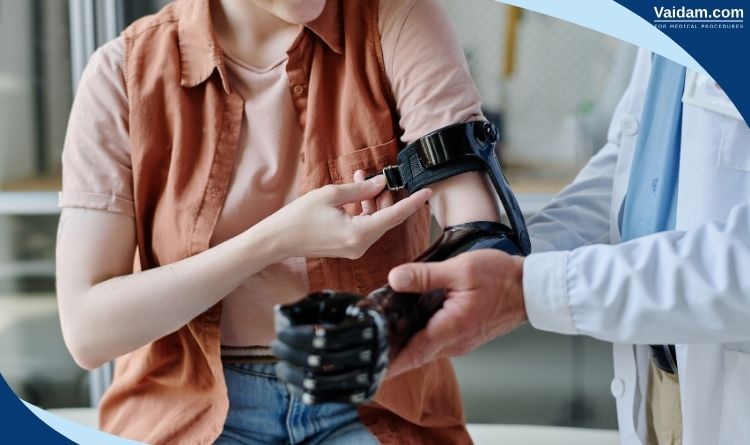
It is a life-altering dynamic, physically and emotionally, to lose a part of your body. This causes significant distress and leads to limited mobility in the day-to-day lives of affected individuals.
Fortunately, modern medicine has made it possible to restore functionality, mobility, and confidence with the help of 'prosthetics'.
The World Health Organisation estimates that more than 35 million people require prosthetics globally, yet only a fraction have access to them due to cost and availability constraints.
- The instances of traumatic limb loss went up from 11.35 million to 13.25 million during 1990-2019.
- The prevalence of limb amputation cases also surged from 370.30 million to 552.50 million during the same period.
India has emerged as a global leader in prosthetic fitment by offering unparalleled and affordable care that attracts patients from across the globe.
Annually, approximately 31,000 prosthetic fitments are performed in India by 700 skilled prosthetists. This translates to each prosthetist fitting of 44.5 limbs per year on average.
This blog answers why India should be your preferred choice for prosthetic fitment, while also exploring its types and available prosthetic procedures in India.
Additionally, it highlights how Vaidam Health facilitates a seamless recovery experience for international patients.
What are Prosthetics?
Prosthetics are medical devices that replace missing body parts and enable affected individuals to regain lost functions.
Prosthetics cater to diverse needs, from enabling amputees to walk again to providing functionality for upper limb amputations. Sometimes, prosthetics also serve aesthetic purposes.
Not only do they replicate physical appearance, but they also empower individuals to lead active and independent lives.
They integrate advanced engineering and medical expertise to create functional, durable, and comfortable devices.
The need for prosthetic fitment could arise due to the following reasons:
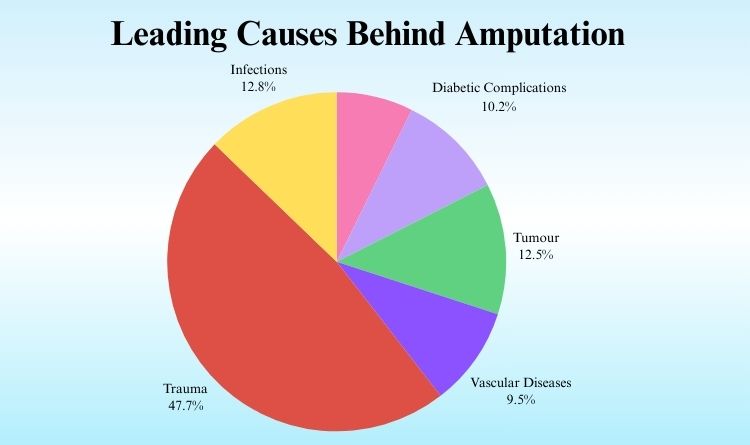
- Traumatic injuries leading to amputations
- Congenital absence
- Disease-related surgical removal of body parts
- Post-cancer tumour removal surgery
Prosthetics are made from a wide variety of materials depending on the use case. These include medical-grade carbon fibre, silicone, aluminium, titanium, plastic composites, polyurethane or rubber, microprocessors and electronics.
Types of Artificial Limb Prostheses
Upper Limb Prostheses
These are applied to replace missing arms, hands or fingers.
- Passive Prostheses: These are lightweight devices mostly used for cosmetic purposes. They are considered when aesthetics are the priority, as they offer limited functional use.
- Transhumeral Prostheses: These prostheses are designed for above-the-elbow amputations. These include elbow joints to enable bending and extending movements.
- Transradial Prostheses: These are specifically for below-the-elbow amputations and replace the missing forearm and hand. Based on the technology used, they allow for a range of functions, such as grasping.
- Myoelectric Prostheses: These are the advanced prostheses that sense electrical signals from the patient's muscles to control movements. They enable tasks such as gripping or rotating a wrist.
- Body-Powered Prostheses: A system of cables and harnesses is used to operate these prostheses by attaching them to the residual limb. These enable movement through body mechanics. These are durable and less costly than myoelectric options.
Lower Limb Prostheses
These types of prostheses replace missing legs, feet, or toes.
- Transtibial Prostheses: These are designed for below-knee amputations. They enable natural walking with proper alignment and energy efficiency. They include a socket, pylon and foot module to restore movement.
- Transfemoral Prostheses: These are specifically made for above-knee amputations. The advanced forms of these prostheses include microprocessor-controlled joints for smoother movement.
Sport-specific Prostheses
These are tailored for athletic activities like running, cycling, or swimming. For example, running blades. These provide enhanced performance for professional or recreational athletes.
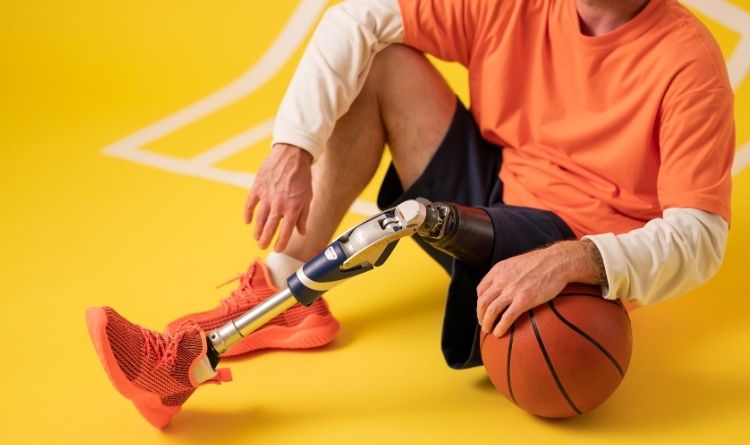
An ideal prosthesis should be
- Lighweight
- Durable
- Functional
- Able to absorb mechanical forces
- Stable in different terrains and angles
Methods of Fixation of Prosthetic Devices
India offers a wide spectrum of prosthetic fitment methods, ranging from the traditional socket-based solution to osseointegration and microprocessor-controlled prosthetics.
The manner of prosthetic fitment significantly affects its comfort and usability.
Here are the key methods available for getting prosthetics in India that offer techniques tailored to the needs of individuals, lifestyle, and budget.
1. Conventional Socket-Based Fitment
This is the most common method of prosthetic fitment in India that securely attaches a customised socket to the residual limb.
It uses suspension mechanisms such as straps, liners, or suction systems to keep the prosthetic in place.
This method is suitable for both upper and lower limb prostheses.
2. Suction Suspension Fitment
This method uses suction to attach the prosthetic to the limb. The socket is set on the residual limb which creates a vacuum seal. In this method, silicone liners or one-way valves are used to improve the suction effect.
It is used in lower limb prosthetics for transtibial and transfemoral amputations. This method provides greater stability and comfort when compared with standard methods.
3. Osseointegration
It is a surgical procedure that eliminates the need for a socket, as the prosthesis is surgically attached to the bone.
A titanium implant is inserted into the bone of the residual limb and the external prosthetic is then connected directly to this implant.
This is suitable for individuals with severe socket-related problems and is used in the case of long-term amputations or for enhanced mobility.
It is available in select specialised centers for prosthetics in India, such as in metropolitan cities and advanced orthopaedic institutions.
4. Modular Prosthetic Systems
This method uses pre-fabricated modular components that are adjusted to fit the patient's residual limb.
The prosthetic is assembled using adjustable parts in combination with liners or straps for suspension.
This approach is favourable for temporary or trial prostheses during the early stages of recovery.
5. 3D-Printed Prosthetics
This approach uses 3D printing technology to create highly customised prosthetics.
In this method scans of the residual limb are taken to design a personalised socket and prosthetic. It is then 3D-printed using lightweight materials like nylon or acrylonitrile butadiene styrene (ABS).
These are suitable for children as they may soon outgrow standard prosthetics.
It is an affordable and accessible option with growing adoption in urban centres for prosthetics in India.
6. Microprocessor-Controlled Prosthetics
This is an advanced fitment technique in which microprocessors adjust the prosthetic's response to enhance functionality.
The prosthetic includes sensors that detect muscle signals or movement intentions.
These are used for upper limb myoelectric prostheses and lower limb prosthetics with motorised knees or ankles. These are highly functional and life-enhancing for patients.
Robotic prosthetics are modern devices that use microprocessors, sensors, motors and AI-driven systems to replicate natural limb functions.
These devices are made from 3D scans and CAD technology to ensure a perfect fit.
How is Prosthetic Fitment Done in India?
The treatment for prosthetics in India involves following stages to ensure the best patient outcomes.
Before the Procedure
- The medical team analyses the patient's medical history, site of limb loss, overall health and specific needs.
- A plaster or digital scan of the residual limb is taken to create a customised prosthetic using 3D scanning or X-ray based on the evaluation.
- Aesthetic options are also taken into account for maintaining natural appearance. For example, skin tone, etc.
During the Procedure
- The prosthetic is fitted onto the residual limb considering alignment and functionality.
- It is calibrated in a way that ensures proper weight distribution and minimises pressure points.
- In the cases of new amputees, surgery is conducted to prepare the residual limb for prosthetic fitment. The duration of the surgery is between 2-4 hours with a success rate of more than 90% in India.
After the Procedure
- The patient learns to walk or move with the prosthetic by starting simple exercises.
- Physiotherapy and occupational therapy are used during rehabilitation for learning to use the prosthetic effectively.
- Revisions are done over time to manage wear and tear, for technological upgrades or as the residual limb changes shape.
Immediate Post-Operative Prostheses (IPOP) are temporary prosthetic devices fitted right after the amputation surgery. These enable the patients to begin their recovery journey without delay.
IPOPs initiate early mobility and functional use of the limb, unlike traditional prosthetic fitting, which may take weeks to months after surgery.
It is attached to the limb usually after 24–48 hours of surgery.
Prosthetic Fitment Cost in India
The cost of prosthetics in India is influenced by the following factors:
- Type of prosthetic
- Materials used
- Technology and features
- Customisation requirements
- Location and medical facility
- Hospital and doctor fees
- Patient's overall health
|
Type of Prosthetic Fitment |
Cost for Indian Patients (INR) |
Cost for International Patients (USD) |
|
Socket-Based Prosthetic |
40,000 – 1,00,000 |
$710 – $1,780 |
|
Suction Suspension Prosthetic |
1,00,000 – 3,50,000 |
$1,780 – $6,220 |
|
Osseointegration |
2,00,000 – 4,00,000 |
$3,550 – $7,100 |
|
Modular Prosthetics |
50,000 – 1,50,000 |
$890 – $2,670 |
|
3D-Printed Prosthetic |
20,000 – 80,000 |
$360 – $1,420 |
|
Microprocessor-Controlled Prosthetic |
2,50,000 – 5,00,000 |
$4,440 – $8,880 |
|
Robotic Prosthetic |
5,00,000 – 12,00,000 |
$8,880 – $21,300 |
|
Breast Prosthetic Implants |
1,50,000 – 4,00,000 |
$2,670 – $7,100 |
|
Facial Prosthetic |
50,000 – 2,00,000 |
$890 – $3,550 |
|
Heart Prosthetic Implant |
4,00,000 – 6,00,000 |
$7,100 – $10,660 |
|
Sports-Specific Prosthetic |
3,00,000 – 6,50,000 |
$5,330 – $11,550 |
How to Care for the Prosthetic Device
Maintenance and proper care of a prosthetic device are important for prolonged use, comfort and functionality. Following are some recommendations to help keep your prosthetic device safe.
- Regular cleaning of the prosthesis using soap and water is important for hygiene and avoiding skin irritation.
- Look for cracks, loose parts, or worn-out components in the prosthesis.
- Check the residual limb every day for any redness, irritation, blisters or pressure sores.
- Practice lightweight activities and exercises recommended by your physiotherapist to improve functionality and adaptability.
- Routine follow-up appointments are helpful to ensure the prosthetic device continues to fit properly and function as it should.
Best Hospitals for Prosthetic Fitment in India
The best hospitals for prosthetics in India are NABH-accredited and utilise the latest diagnostic and surgical methods to help patients improve functionality and overall health.
1. Nanavati Super Speciality Hospital
Established in 1950, this hospital performs over 500 prosthetic fitments every year and specialises in suction suspension systems and modular prosthetics. The hospital ensures that their patients regain mobility through its dedicated rehabilitation team.
2. Medanta- The Medicity, Gurgaon
A prominent hospital established in 2009, this is known for pioneering osseointegration techniques and microprocessor-controlled prosthetics. The hospital has completed over 1,000 prosthetic implants to date.
3. Fortis Memorial Research Institute, Gurgaon
Established in 2001, this renowned hospital annually fits nearly 600 prosthetics in India. It is known for its patient-centric approach by offering customised solutions for upper and lower limb amputees.
4. Indraprastha Apollo Hospital, New Delhi
Every year, this hospital handles around 1,200 prosthetic procedures, including complex surgeries for robotic and 3D-printed prosthetics. It was established in 1995 and was among the first hospitals for prosthetics in India to adopt immediate post-operative prosthetics (IPOP) for faster recovery.
This prestigious hospital was established in 1973. It has developed unique solutions for children and athletes through its work in lightweight prosthetic materials. It specialises in 3D-printed prosthetics in India and performs around 400 such procedures every year.
Best Doctors for Prosthetic Fitment in India
Doctors for prosthetics in India are acclaimed globally for their comprehensive training and ability to deliver top-notch medical care at competitive prices.
Below is a selection of some of the leading doctors for prosthetic fitment in India who are known for their outstanding skills and successful outcomes.
He is a leading orthopedic and joint replacement surgeon garnering over 25 years of expertise. He has successfully conducted 900+ joint replacement and prosthetic fitments. His work is recognised by both national and international orthopaedic associations.
Dr. Arora is known for his 28 years of specialisation in joint replacement and sports injury surgeries. His work in modular prosthetics in India and post-operative rehabilitation has helped many patients regain their mobility. He has successfully conducted more than 15,000 surgeries to date.
Dr. Oberoi is a pioneer in joint replacements and orthopaedic surgeries having more than 31 years of expertise. He has gained recognition for treating complex cases involving lower limb prosthetics in India. He has performed over 7000 joint replacements and prosthetic implantations.
Dr. Jangid brings innovation to prosthetics in India by combining technology with patient care. With over 25 years of experience, he has a strong record in restoring mobility.
Dr. Verma is a highly skilled orthopaedic and joint replacement surgeon having 27 years of experience. He focuses on improving quality of life by performing joint replacements, limb reconstruction and managing trauma.
How to Plan Your Prosthetic Fitment in India
India has emerged as a premier destination for prosthetic fitment where advanced care and a range of benefits are available for international patients.
The robust medical tourism ecosystem in India offers seamless care.
Vaidam Health is a reliable partner for international patients who seek to get prosthetics in India. We simplify the entire process from hospital selection and visa assistance to travel and lodging.
- Customised Recommendations: We provide a detailed list of hospitals and doctors based on specific needs of the patient.
- Cost Transparency: We help you get the estimated costs of complete treatment and abroad visits in INR and USD.
- Visa Assistance: We secure on-time medical visas for patients to facilitate their travel to India.
- Travel and Accommodation: We manage airport transfers, stay and food arrangements for ease and seamless experience.
- Language Translation Services: The Vaidam case managers speak many languages, depending on the use case, to facilitate clear communication between healthcare professionals and the patient.
- 24/7 Support: Vaidam offers a dedicated case manager to help the patient round-the-clock with any inconvenience that may arise.
- Post-Treatment Care: We coordinate follow-ups and recovery programs to secure continued health.
Frequently Asked Questions about Prosthetic Fitment in India
How long does it take to get prosthetic fitment in India?
The duration of the entire process is between 4-8 weeks. It also depends on the need for additional procedures like bone grafting and the number of visits.
When might the need for prosthetic replacement arise?
The need for prosthetic replacement arises due to growth or residual limb changes, wear and tear, need for more functionality, technological upgrades or lifestyle changes.
What are the potential risks associated with prosthetic fitment in India?
Some common risks after prosthetic fitment are skin irritation or pressure sores, phantom limb pain, swelling of the residual limb due to fluid retention, infections, component problems and mobility challenges.
How does the prosthetic fitment process work in India, from preparation to post-operative care?
The process for getting prosthetics in India starts from pre-fitment preparation where the medical team analyses the patient’s medical history and residual limb condition.
The customised prosthetic is then attached to the residual limb and adjusted for proper alignment, comfort, and functionality.
Lastly, physical and occupational therapy are conducted to help the patient adapt to the new prosthetic.
Written by

Aastha Upadhyay
Vaidam Health · Updated 25 Sept 2026
I am Aastha, a medical content writer with a Master's degree in Biostatistics. Whether creating articles, blogs, or patient-centric guides, I strive to write well-researched and accessible content that informs and educates diverse audiences.
Content meets the Vaidam Policy and is medically reviewed
Medically reviewed by
Dr. Bhawana Mittal Chat
Chat