

Life Expectancy in Patients With Ascites
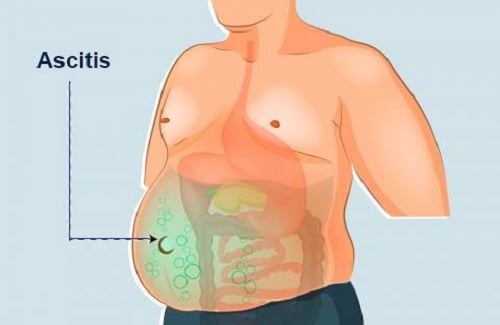
Ascites is a condition in which there is an accumulation of fluid inside the abdomen. It occurs as a consequence of liver failure. The lining between the abdomen and other organs gets filled up with fluid. It is mostly associated with cirrhosis of the liver.
Cause
The most commonly known cause of ascites in cirrhosis of the liver. The following flow chart explains how does cirrhosis leads to ascites. Cirrhosis ultimately leads to an increase in the pressure in the blood vessels of the liver. This leads to ascites.
What are the Associated Risk Factors?
Following are some of the conditions which can eventually lead to ascites:
- Cirrhosis
- Hepatitis C
- Hepatitis B
- Excessive use of alcohol
- Ovarian or endometrial cancer
- Pancreatic cancer
- Heart failure
- Kidney failure
- Hyperthyroidism
- Pancreatitis
- Tuberculosis
Signs and Symptoms
The signs and symptoms can either be quick and sudden or appear gradually, depending upon the associated cause. These symptoms are listed below:
- Swelling in the abdomen
- Reduced appetite
- Bloating
- Difficulty to breath while lying down
- Sudden weight gain
- Heartburn
- Pain in the abdomen
- Nausea
- Vomiting
- Swelling in the ankles and legs
- Hernia
- Fever
- Indigestion
How is it Diagnosed?
The most common tests that are done by the best gastroenterologists in India are given below:
- Angiography
- Laparoscopy
- Blood tests
- MRI
- Ultrasound
- Paracentesis
*Paracentesis is a procedure involving the insertion of a needle through the abdominal wall to remove the fluid. This fluid is sent for examination to check for any signs of infection, cancerous growth or any other issues.
How is it Treated?
Following approaches to treatment can be followed to treat ascites.
1. Diuretics
These are the most common form of drugs to treat ascites. Diuretics are also known as “water pills” and are used to reduce the amount of salt and water from the body, resulting in the lowering of pressure in the vessels of the liver. A few examples of diuretics are furosemide and spironolactone.
2. Paracentesis
If the symptoms are severe and medications fail to make any improvement, then the doctors recommend a procedure called Paracentesis. This procedure is used for removing large amounts of fluid from the abdomen by using a long and thin needle. The patients are also put on antibiotics since there is a risk of infection during paracentesis.
3. Surgery
In cases that are even more extreme in nature, a permanent shunt is inserted in the body through a surgical procedure. This shunt re-routes the flow of blood around the liver.
The last option for the treatment of ascites is the liver transplant.
What is the Life Expectancy of Patients Having Ascites?
Ascites already occurs as a result of cirrhosis. And by this time, a lot of damage has been done to the liver. The average life expectancy of a person having ascites usually depends upon the underlying cause and intensity of the symptoms. Overall, the prognosis of ascites is very poor. The survival rate varies from 20-58 weeks.
Preventive Measures
- Reduce alcohol consumption to prevent cirrhosis
- Get a vaccination for Hepatitis B
- Weight management
- Controlled use of NSAIDs (Non-steroidal Anti Inflammatory Drugs). For example - aspirin, indomethacin etc.
- Eat a low-salt diet with around 2000 mg per day.
- Have protected sex.
Written by
Dr. Kavreen Arora
Vaidam Health · Updated 25 Sept 2026
Content meets the Vaidam Policy and is medically reviewed

Medically reviewed by
Dr. Bhawana Mittal Chat
Chat