

Affordable Prostate Cancer Treatment in India: A Comprehensive Guide
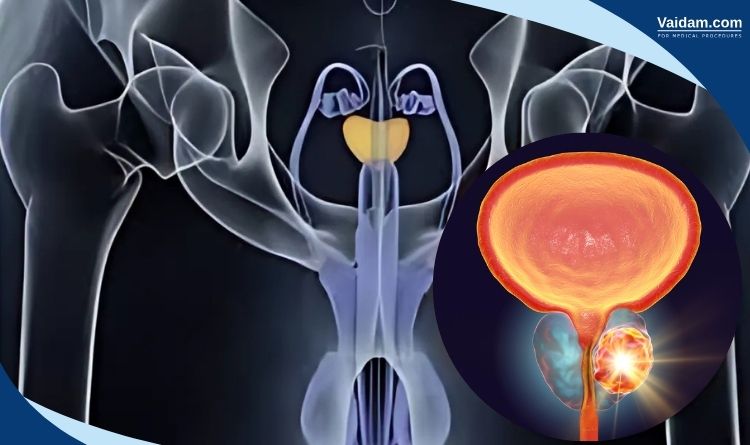
Prostate cancer is the most common cancer in men worldwide. According to estimates, it ranks as the second most frequent cancer among men, with over 1.4 million new cases diagnosed globally in 2020. The disease also accounted for more than 375,000 deaths that year, underscoring its significant health impact.
This condition predominantly affects older men, with the median age at diagnosis being around 66 years. Advancements in treatment, including active surveillance, surgery, radiotherapy, and hormone therapy, have significantly improved survival rates. Despite this progress, disparities in access to care remain a major concern globally
India’s latest advancements in medical technology, experienced cancer experts, and cost-effective treatment options make it a preferred destination for prostate cancer treatment.
Let’s explore how you can plan a hassle-free prostate cancer treatment in India.
What is the Prostate Gland?
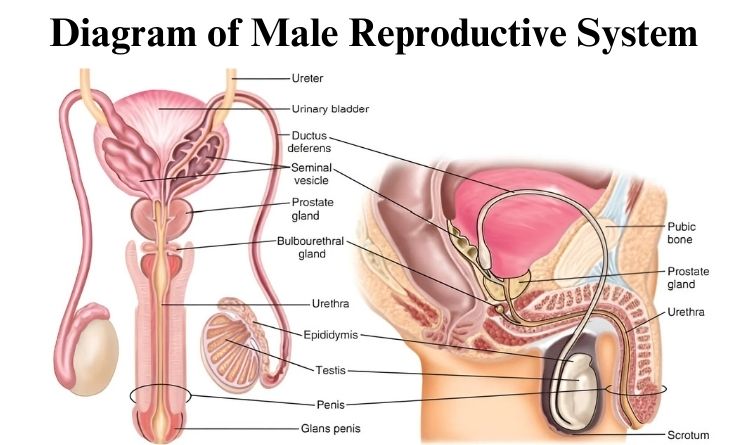
The prostate gland is a tiny, walnut-shaped organ present in the male reproductive system. It is located just below the bladder, in front of the rectum.
- The prostate contributes to the production of seminal fluid, which forms about 30% of semen. This fluid provides nourishment and protection to sperm, enhancing their motility and viability.
- The prostate helps convert testosterone, the main male hormone, into a more active form called dihydrotestosterone (DHT). This process is important for the development of male sexual characteristics as well the maintenance of prostate health.
- The fluid produced by the prostate contains enzymes like prostate-specific antigen (PSA), which helps maintain the semen’s liquidity and allows sperm to move freely for fertilisation.
What is Prostate Cancer and its Symptoms?
Prostate cancer is defined as abnormal cell growth in the prostate gland. This leads to the formation of tumours and can sometimes spread to other parts of the body, including bones and lymph nodes.
To understand the treatment plan, let’s first get into the types of prostate cancer.
Prostate cancer can be categorised into different types, such as:
- Adenocarcinoma: This is the most common type of prostate cancer and accounts for about 95% of cases. Adenocarcinoma develops in the gland cells of the prostate and grows slowly.
- Small cell carcinoma: This is a rare but aggressive form of prostate cancer. It grows more quickly than adenocarcinoma and may also spread to other parts of the body.
- Transitional cell (or urothelial) cancer: This type of cancer starts in the cells of the urinary bladder but is known to develop in the prostate as well.
- Sarcomas, Carcinoid Tumours, and Other Rare Types: These are some rarely occurring prostate cancer that develop in different kinds of cells in the prostate gland.
Some of the early signs of prostate cancer include:
- Frequent urge to urinate, especially at night
- Difficulty in starting or stopping urination
- Weak or interrupted urinary stream
- Painful or burning sensation during urination or ejaculation
- Visible blood drops in urine or semen
When the cancer reaches an advanced stage, you may feel severe pain in the lower back, hips, or pelvis, as well as swelling in the legs or feet. Bone fractures and weakness are considered advanced prostate cancer symptoms.
What are the Causes of Prostate Cancer?
The exact cause of prostate cancer isn’t fully understood, but factors which are believed to contribute to prostate cancer are:
- Age
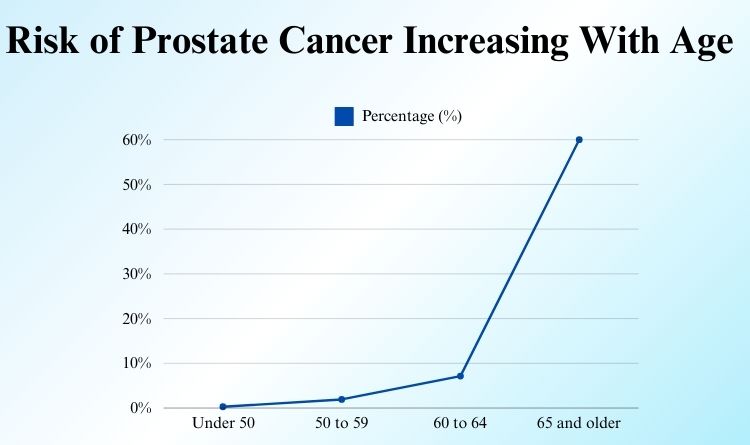
The risk of developing prostate cancer increases as men age, especially after the age of 40, with most cases occurring in men over 65.
-
Genetic Factors
A family history of prostate cancer can increase a man’s chances of developing prostate cancer. This means that if a close relative (father, brother) had prostate cancer, the likelihood of developing the disease increases in the next generation.
In rare cases, inherited mutations in genes such as BRCA1, BRCA2, and Lynch syndrome may contribute to increasing the risk of prostate cancer.
Do You Know?
- African-American men have the highest risk globally, with prostate cancer incidence rates approximately 70% higher than Caucasian men.
- Asian and Hispanic men have lower rates of prostate cancer due to lifestyle and genetic factors.
- Hormonal Influence
Research published in Cancer Epidemiology, Biomarkers & Prevention indicates a positive correlation between elevated testosterone levels and increased prostate cancer risk in older men.
- Diet and Lifestyle Factors
A study in The Journal of Clinical Nutrition found that men with diets high in red meat had a 12% increased risk of prostate cancer.
Moreover, some diets rich in tomatoes (lycopene) were associated with a 23% lower risk of prostate cancer.
- Chemical Exposure
Studies show that men exposed to Agent Orange, a herbicide used during the Vietnam War, have a 52% higher risk of developing prostate cancer, as per reports by the Department of Veterans Affairs.
- Inflammation and Infection
Chronic inflammation of the prostate gland (prostatitis) may increase the risk of developing prostate cancer, though the link remains under study.
The prostate published that the men with a history of prostatitis (prostate inflammation) have a 1.8 times higher risk of prostate cancer.
How to Diagnose Prostate Cancer?
Prostate cancer is determined with a series of screening to confirm the disease and early detection of prostate cancer. Then, diagnostic tests help to assess its extent, and after which an appropriate treatment plan is generated.
PSA (Prostate-Specific Antigen) Test
It is a form of blood test that estimates the level of PSA, a protein produced by the prostate gland in males.
Normal levels of PSA in men are below 4 ng/mL, but if the person has prostate cancer, this range is elevated to 10 ng/mL, suggesting prostate cancer, benign prostatic hyperplasia (BPH), or prostatitis.
Digital Rectal Exam (DRE)
It is a physical examination where a doctor inserts a finger with gloves on, into the rectum of the patient to feel the prostate for abnormalities like lumps or hard areas.
It is often combined with a PSA test to identify prostate gland abnormalities.
Biopsy
With a sterile needle tissue samples from the prostate gland are collected, and then ultrasound or multiparametric MRI (mpMRI) is used to guide towards the cancer location.
MRI
It provides detailed imaging to detect suspicious areas containing cancerous cells and guide targeted biopsies.
Genetic and Molecular Testing
It helps to evaluate genetic markers associated with prostate cancer, such as BRCA1 and BRCA2, HOXB13, ATM, CHEK2, etc. and tumour biology to predict cancer aggressiveness.
PSMA PET Scan
It is an advanced imaging technique that detects prostate-specific membrane antigen (PSMA) and identifies cancer spread.
The guidelines suggest that men should get tested for prostate cancer at age 55. Men between the 40 and 54 years of age may need to get tested earlier if:
- You have a close family member (like your father or brother) who had prostate cancer.
- You are African-American, because this group has a higher risk of getting more serious forms of prostate cancer.
Gleason Scoring System for Prostate Cancer
The Gleason Scoring System is a widely used method for assessing stage of prostate cancer.
- After a needle biopsy, the tissue samples are sent to a pathologist for examination under a microscope.
- The pathologist identifies the two most common patterns of abnormal prostate cells and assigns each a grade between 1 and 5 based on how different they appear from normal cells.
What the Scores Mean
- Score 6 or lower: It indicates low-grade cancer, which is less likely to spread and is kept under close monitoring.
- Score 7: It represents intermediate-grade cancer, which has a moderate risk of progression.
- Scores 8 to 10: It signifies high-grade cancer, which is more aggressive and likely to grow or spread rapidly.
TNM Classification for Prostate Cancer
The TNM system (Tumor, Node, Metastasis) is a globally recognised framework used to describe the extent of prostate cancer. It helps in staging the disease, guiding treatment, and predicting outcomes.
- Tumor (T)
Describes the size and extent of the primary tumour in the prostate prostate.
- T1: The tumour cannot be detected through imaging or physical examination.
- T2: The tumour is confined to the prostate.
- T3: The tumour has extended beyond the prostate and has grown through the prostate capsule.
- T4: The tumour has invaded nearby structures, such as the bladder, rectum, or pelvic wall (excluding the seminal vesicles).
- Node (N)
It indicates whether the cancer has spread to nearby lymph nodes.
- N0: No regional lymph node involvement.
- N1: Cancer has spread to regional lymph nodes.
- Metastasis (M)
It determines whether cancer has spread to distant parts of the body, such as bones or other nearby organs.
- M0: No distant metastasis.
- M1: Cancer has spread to non-regional lymph nodes and other distant organs, such as the liver or lungs.
What are the Stages of Prostate Cancer?
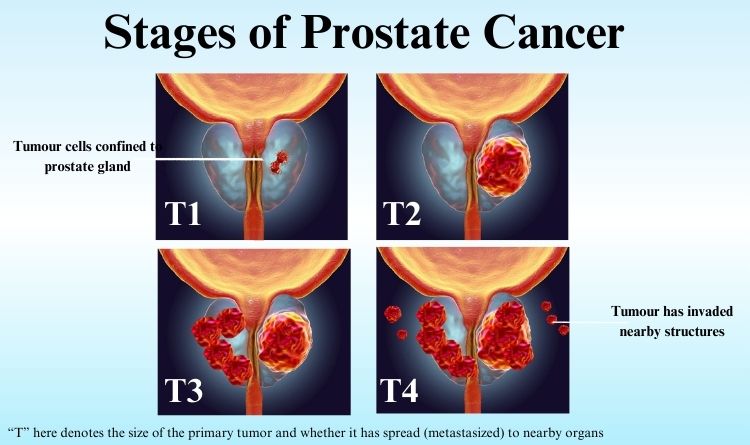
Prostate cancer can range from slow-growing, low-risk tumours to aggressive, life-threatening ones. For doctors, the main goal during the initial evaluation is to confirm the presence of the disease and determine how far it has spread (both locally and to other parts of the body) as well as how aggressive it is.
This process, known as staging, is crucial for predicting the likely outcome and deciding on the best treatment options.
Stage I: Localised and Low-Risk Prostate Cancer
- The cancer is usually small and slow-growing and confined to the prostate.
- It is TNM Classification:
- T1: The tumour is too small to be detected via DRE or imaging but is found during biopsy.
- No lymph node involvement (N0) or metastasis (M0).
- PSA Levels: Less than 10 ng/mL.
- Gleason Score: 6 or lower (low grade).
Prognosis and Treatment:
- Excellent prognosis with active surveillance, surgery, or radiation therapy.
Stage II: Localised but Intermediate-Risk Prostate Cancer
- Description:
- The cancer remains confined to the prostate but is larger or more aggressive than Stage I.
- TNM Classification:
- T2: Tumor is confined within the prostate but can be felt during DRE or seen on imaging.
- No lymph node involvement (N0) or metastasis (M0).
- PSA Levels: Between 10-20 ng/mL.
- Gleason Score: 7 (intermediate grade).
Prognosis and Treatment:
- High success rates with surgery (prostatectomy), radiation, or active surveillance in select cases.
Stage III: Locally Advanced Prostate Cancer
- Description:
- The cancer has grown beyond the prostate but hasn’t spread to distant organs.
- TNM Classification:
- T3: Tumor extends into surrounding tissues or seminal vesicles.
- No lymph node involvement (N0) or metastasis (M0).
- PSA Levels: Over 20 ng/mL.
- Gleason Score: 8 or higher (high grade).
Prognosis and Treatment:
- Treatment may include a combination of surgery, radiation therapy, and hormone therapy.
Stage IV: Advanced or Metastatic Prostate Cancer
- Description:
- The cancer has spread to distant organs such as bones, lymph nodes, or other areas.
- TNM Classification:
- T4: Tumor invades nearby structures like the bladder or rectum.
- N1: Cancer has spread to nearby lymph nodes.
- M1: Cancer has metastasised to distant sites.
- PSA Levels: Often very high.
- Gleason Score: 8 or higher (high grade).
Prognosis and Treatment:
- Focused on managing symptoms and slowing progression using systemic treatments like hormone therapy, chemotherapy, immunotherapy, or targeted therapies.
What are the Treatments for Prostate Cancer?
The treatment of prostate cancer varies based on the stage, aggressiveness, and patient-specific factors. The treatment method targets cancer cells while aiming to preserve quality of life. Some of the treatment approaches are listed below.
Surgery
Surgical options focus on removing cancer-affected tissue, ranging from minimally invasive techniques to more extensive procedures:
- Radical Prostatectomy: A surgery to remove the entire prostate gland along with nearby tissues, often used for localised prostate cancer. This can be performed via traditional open surgery or advanced robotic-assisted methods to ensure precision and faster recovery.
- Transurethral Resection of the Prostate (TURP): This surgical procedure removes portions of the prostate through the urethra.
- Transurethral Evaporation of the Prostate (TUEVP): Similar to TURP, this technique uses electric current to vaporise excess prostate tissue, improving urine flow in cases of obstruction.
Radiation Therapy
Radiation therapy involves high-energy rays to destroy cancer cells and is often used after surgery or for advanced cases of prostate cancer.
- Intensity-Modulated Radiation Therapy (IMRT)
IMRT is an advanced type of radiation therapy where the radiation beams are shaped and modulated to match the size, shape, and location of the tumour.
The radiation dose can be adjusted (or modulated) during treatment to focus more on the cancer cells.
It reduces the risk of side effects like urinary or bowel problems since less radiation reaches healthy organs.
- Stereotactic Body Radiation Therapy (SBRT)
SBRT delivers high-dose radiation focusing on the cancerous area. Unlike IMRT, which spreads the dose over many sessions, SBRT uses fewer sessions (often 3 to 5 sessions) by delivering much higher doses each time. It is considered suitable for small, well-defined tumours or early-stage prostate cancers, where precision and speed of treatment are critical.
Proton Therapy
With the help of cyclotron, charged protons are generated that aim to tumour area. It focuses on delivering the right amount of radiation and is a painless procedure.
High-Intensity Focused Ultrasound (HIFU)
HIFU is a non-invasive treatment that uses sound waves to target and destroy cancer cells in the prostate gland. The process works by directing high-frequency ultrasound waves precisely at the cancerous tissue, causing it to heat up and break down, while sparing the healthy tissue nearby.
Prostate-Specific Membrane Antigen (PSMA) Therapy
It is a type of targeted treatment for advanced prostate cancer. It uses a radioactive substance, like Lu-177, which binds specifically to PSMA proteins on cancer cells. This enables the radioactive material to destroy cancer cells while leaving healthy cells unharmed. It is highly effective for advanced and metastatic prostate cancer and has fewer side effects compared to chemotherapy.
Dendritic Cell Therapy
Dendritic cells are the immune cells which are collected from the patient, activated in a lab, and then injected back into the body to stimulate a strong immune response against the cancer. It enhances the body’s natural ability to fight cancer. At the top cancer centres in India, this approach is combined with other therapies for improved outcomes.
Androgen Deprivation Therapy (ADT)
ADT, or hormone therapy, is used to lower male hormones (androgens) like testosterone, which fuel prostate cancer growth. This treatment is typically used for advanced or metastatic prostate cancer, which slows prostate cancer progression.
Hormone Therapy
Hormone therapy, or androgen deprivation therapy (ADT), reduces levels of male hormones (androgens) that fuel prostate cancer growth. It is often combined with other treatments for advanced or recurrent cancer.
Chemotherapy
Chemotherapy involves the use of drugs to kill rapidly dividing cancer cells, particularly effective in cases where the cancer has spread (metastatic prostate cancer).
Immunotherapy
Immunotherapy stimulates the body’s immune system to attack prostate cancer cells. Options include:
- Sipuleucel-T (Provenge): A personalised immunotherapy designed to enhance the immune response against prostate cancer.
- Checkpoint inhibitors: Emerging therapies for advanced stages or recurrent cancer.
Each treatment has specific indications, benefits, and potential side effects. A multidisciplinary approach ensures that therapy is tailored to achieve optimal outcomes while minimising risks.
The cost of prostate cancer surgery in India is more cost-effective than in Western countries. The expense usually includes the surgical procedure, anaesthesia, operating room charges, necessary medical supplies, and hospitalisation.
My father couldn’t walk due to prostate cancer. Due to financial issues, we had to change hospitals. My sister contacted Vaidam Health, and with the help of their team, my father was treated in a hospital equipped with chemotherapy and other advanced facilities. My father’s condition is now improving.
Son of Mr. Njoya Chaidou, a 63 Years patient from Cameroon
Which Doctor is Best for Prostate Cancer Treatment?
The best doctors for Prostate Cancer Treatment in India is a Uro-Oncologist specialising in managing prostate cancer cases. They combine expertise in urology and oncology for advanced cancer care and manage stage 4 prostate cancer. If you’re looking for best prostate cancer treatment in India, you may consult following doctors:
With more than 22 years, his area of expertise lies in treating urological cancers through surgical interventions, including Open, Laparoscopic, Robotic Partial Nephrectomy, and Radical Nephrectomy for Kidney cancer.
With a clinical experience of 29 years, he specialises in prostatic diseases and robotic and laparoscopic uro - uro-ecological surgery(including radical prostatectomy, radical cystectomy, radical nephrectomy, and partial nephrectomy and nephroureterectomy).
He has over 37 years of experience, and In 2010, he started robotic-assisted urological surgery for prostate, kidney, and bladder cancer and other urological reconstructions like pyeloplasty.
Which Hospitals are Best for Prostate Cancer Treatment?
The best hospitals for Prostate Cancer Treatment in India have dedicated oncology centres that focus on prostate cancer and are considered suitable for prostate cancer treatment.
Since, they have a multidisciplinary team and advanced facilities where urologists, oncologists, radiation therapists, and surgeons collaborate, they provide the best-personalised care.
Medanta - The Medicity, Gurgaon
The unit is well-equipped with the cutting-edge devices to perform several complex procedures such as robotic radical prostatectomy, robotic partial nephrectomy, percutaneous renal surgery, TRUS/MRI fusion prostate biopsy, optical internal urethrotomy, bladder neck incision, nephroureterectomy and many more.
Fortis Hospital, Bangalore (Bannerghatta Road)
The department provides a wide range of diagnostic and therapeutic procedures for urology cancers, prostate diseases, laparoscopic urology, reconstructive urological surgeries, erectile dysfunction, and pediatric renal transplant.
What to Expect Before, During, and After Prostate Cancer Surgery?
Before Surgery
A thorough health check will be conducted. This includes blood tests, imaging scans, and possibly an electrocardiogram (ECG). These tests help your surgeon plan the procedure and ensure your body is ready for surgery.
- Discussing the Procedure:
- Your doctor will explain the type of surgery—be it open prostatectomy, laparoscopic, or robotic-assisted surgery—and what it involves. Don’t hesitate to ask questions about the risks, benefits, and recovery time.
- Lifestyle Adjustments:
- You may be asked to stop smoking, adjust your diet, or pause certain medications. These changes can reduce complications and speed up recovery.
- Your surgeon might also recommend pelvic floor exercises to strengthen muscles for post-surgery recovery.
- Emotional Preparation:
- It’s natural to feel anxious. Share your concerns with loved ones, or consider speaking with a counsellor. Mental preparation is just as important as physical readiness.
During Surgery: What Happens in the Operating Room
On the day of the surgery, your medical team will ensure you’re comfortable and safe throughout the procedure.
You’ll receive general anaesthesia to keep you asleep and pain-free during the surgery.
Depending on your case, your surgeon will either remove the prostate gland (radical prostatectomy) or perform a nerve-sparing surgery to preserve functions like urinary control and sexual health.
If robotic-assisted surgery is chosen, advanced technology ensures precision with minimal invasion.
The surgery typically lasts 2-4 hours. Once complete, you’ll be taken to the recovery area for observation.
Receive Comprehensive Prostate Cancer Care in India!
The cutting-edge technology, experienced specialists, and a patient-first approach ensures that India delivers affordable and world-class prostate cancer care.
By choosing India for prostate cancer, you experience healthcare facilities which focus on the integration of expertise and innovation to improve the treatment.
Don’t worry. Your path to recovery doesn’t have to be stressful or financially draining. India offers the perfect blend of affordability and excellence. Choose India for prostate cancer treatment and take the first step toward a healthier tomorrow
Written by

Divya Rani
Vaidam Health · Updated 26 Dec 2024
With an educational background in life sciences and allied disciplines, Divya is passionate about delivering content to people in the most understandable way possible. Her knowledge in diverse fields, which she obtained through hands-on training and conferences, also allows her to connect interdisciplinary concepts. This brings a unique perspective to her writing. She loves to create engaging content that educates, inspires, and sparks meaningful conversations.
Content meets the Vaidam Policy and is medically reviewed

Medically reviewed by
Dr. Bhawana Mittal Chat
Chat