

GERD (Gastro-Esophageal Reflux Disease)
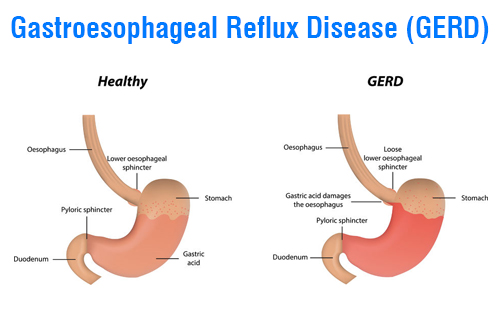
This is the most common digestive disorder which occurs when acidic juices of the stomach push back into the esophagus. This can happen in all age groups from infants to adults. It is a chronic condition which can occur in recurrent episodes. A person mainly experiences acid reflux more frequently than normal. It can be treated by over the counter medications or even by home remedies sometimes. GERD can also be prevented by changing lifestyle and improving food habits.
It is seen that asthma patients are most commonly affected by GERD. This is because the lower esophageal sphincter is relaxed during an Asthma flare up, which allows the stomach acids to flow back or reflux back into the lower part of the esophagus. Some asthma medications can also worsen the condition. Not only this, but the acid reflux can also make the condition worse for asthma patients by causing irritation or allergic reaction in the lungs or the airways.
Signs and Symptoms
Following signs and symptoms can be seen in people with GERD,
- Heartburn or burning in the chest after meals.
- Difficulty swallowing
- Reflux of food or fluids
- Chest pain
- Indigestion
- Sore throat
- Inflammation of gums
- Difficulty sleeping
- Worsening symptoms of asthma
Causes and Risk Factors
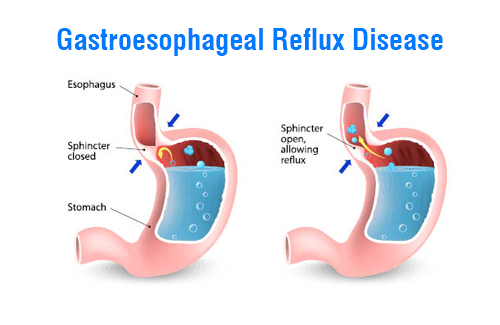
The fundamental cause of GERD is acid reflux. There is a band of muscles at the lower end of the esophagus which forms esophageal sphincter. The sphincter relaxes during intake and closes again. If there is any weakness or abnormality in the muscles, it may lead to GERD. Following risk factors may increase the chances of GERD:
- Hiatal hernia
- Delayed digestion
- Pregnancy
- Scleroderma
- Smoking
- Eating late night meals
- Eating frequent fried foods
- Excessive alcohol or coffee consumption
- Use of medications such as aspirin
Diagnosis
After a detailed case history and physical examination, the following tests are conducted to confirm the diagnosis of GERD.
Upper endoscopy - A thin flexible tube is inserted with light and camera inserted on it into the throat to analyze the inner lining of the stomach and esophagus. The endoscopy helps in detecting inflammation of the esophagus. It is also used to extract samples of the esophageal tissues to sent for biopsy for extreme cases.
Ambulatory acid probe test - The doctor inserts a monitor in the esophagus to measure the time for which the stomach acid regurgitates. This monitor is connected to a small computer that is worn by the patient around the waist or over the shoulders.
Esophageal manometry - This is done to check the rhythmic contractions of the muscles of the esophagus while swallowing. It also measures the coordination and action of the muscles.
X-ray chest - This is done to see the silhouette of the esophagus, stomach, and upper intestine to diagnose narrowing of the esophagus that might be interfering with the swallowing.
Treatment
Some of the best gastroenterologists of India usually follow the following approaches to treat GERD:
Medications
- H2 blockers - This is given to reduce the acid production
- Antacids - To neutralize the acid secreted by the stomach
- Prokinetics- To speed up the stomach emptying process
- Antibiotics - In some cases, antibiotics are also prescribed to treat any infection if present.
Surgical Options
- Fundoplication - The upper part of the stomach is wrapped around the lower part of the esophagus to create a pressure in the food pipe. This prevents the reflux of the acids from the stomach. Fundoplication is either done partially or completely.
- Endoscopic procedures - This comprises of a number of procedures done to tighten the sphincter muscles to prevent the reflux. This includes either suturing the sphincter muscles or use of radiofrequency, using heat to create the tightening.
- LINX device - LINX devices is a small ring made magnetic beads, which is wrapped around the junction of the stomach and the esophagus. The magnetic force between the beads keeps the sphincter muscles closed enough to avoid the acid getting refluxed back into the food pipe. However, there is enough space for the food to pass through the esophagus to pass into the stomach.
Dietary and Lifestyle Changes
Some dietary and lifestyle changes are also required to be done, which include,
- Avoid overeating
- Do not eat 2-3 hours before sleeping
- Quit smoking and alcohol consumption
- Avoid wearing clothes that are tight around the waist
- Weight management
- Avoid acidic foods that act as a trigger such as caffeine, garlic, alcohol, sauces, peppermint, spicy foods, greasy foods, etc
- Elevation of the head at an angle to the abdomen while lying down
- Management of anxiety and stress
If you are looking for a good treatment for GERD, you must visit some of the best gastroenterology hospitals in India, which give the top class treatment at affordable prices.
Written by
Dr. Kavreen Arora
Vaidam Health · Updated 25 Sept 2026
Content meets the Vaidam Policy and is medically reviewed
Medically reviewed by
Dr. Bhawana Mittal Chat
Chat