

Vaccination Chart for Babies in India
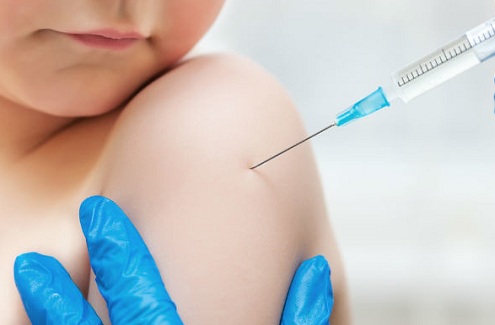
The entire concept of vaccination is based on the fact that the immune system is triggered to develop the defence system, whenever there is an illness. Since the ultimate goal is to prevent the infants from developing ailments. Vaccination is the first step towards that. Vaccination is a method of instructing the immune system to identify and fight a certain type of infection.
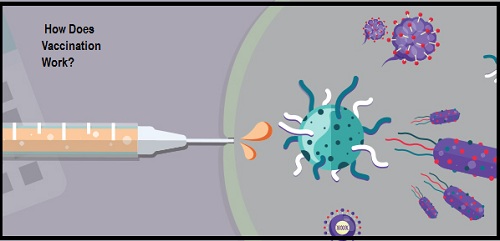
How does vaccination work?
A vaccine contains a mild form of a certain microorganism. It triggers the body's immune system to start a defence system against that type of infection. It enables the immune system to memorise the antigens that cause infection. This facilitates a quicker response by the immune system when the infection actually attacks the body.
Typically, a vaccine has two components. The first is an antigen and the other is the adjuvant. The antigen is something the body memorizes to identify later. The adjuvant helps the body to respond in a stronger way the next time when the organism attacks.
The National Immunization Schedule is an initiative by the Health Ministry which releases the vaccination chart every year. This chart contains vaccinations needed for a person after his birth until 18 years of age. Each vaccine has to be given at a certain age, to get the desired effect of the immune system.
Here is the vaccination chart for babies in India 2019.
For Infants
|
BCG |
At birth or as early as possible until one year of age |
0.1ml (0.05ml until 1 month of age) |
Intradermal |
Left Upper Arm |
|---|---|---|---|---|
|
Hepatitis B Birth Dose |
At birth or as early as possible within 24 hours |
0.5 ml |
Intramuscular |
Anterolateral side of mid-thigh-LEFT |
|
OPV Birth dose |
At birth or as early as possible within the first 15 days |
2 drops |
Oral |
- |
|
OPV 1,2 & 3 |
At 6 weeks, 10 weeks & 14 weeks |
2 drops |
Oral |
- |
|
IPV (inactivated Polio Vaccine) |
14 weeks |
0.5 ml |
Intramuscular |
Anterolateral side of mid-thigh-RIGHT |
|
Pentavalent 1,2 & 3 |
At 6 weeks, 10 weeks & 14 weeks |
0.5 ml |
Intramuscular |
Anterolateral side of mid-thigh-LEFT |
|
Rota Virus Vaccine |
At 6 weeks, 10 weeks & 14 weeks |
5 drops |
Oral |
- |
|
Measles 1st Dose |
9 completed months-12 months. (give up to 5 years if not received at 9-12 months age) |
0.5 ml |
Subcutaneous |
Right Upper Arm |
|
Vitamin A, 1st Dose |
At 9 months with measles |
1 ml (1 lakh IU) |
Oral |
- |
For Children
|
DPT 1st booster |
16-24 months |
0.5 ml |
Intramuscular |
Anterolateral side of mid-thigh-LEFT |
|
OPV Booster |
16-24 months |
2 drops |
Oral |
|
|
Measles 2nd dose |
16-24 Months |
0.5 ml |
Subcutaneous |
Right Upper Arm |
|
Vitamin A (2nd to 9th dose) |
16 months with DPT/OPV booster, then, one dose every 6 months up to the age of 5 years) |
2 ml (2 lakh IU) |
Oral |
- |
|
DPT 2nd Booster |
5-6 years |
0.5 ml. |
Intramuscular |
Left Upper Arm |
|
TT |
10 years & 16 years |
0.5 ml |
Intramuscular |
Upper Arm |
Let us go through some of these important vaccines in the vaccination chart for babies in India with prices.
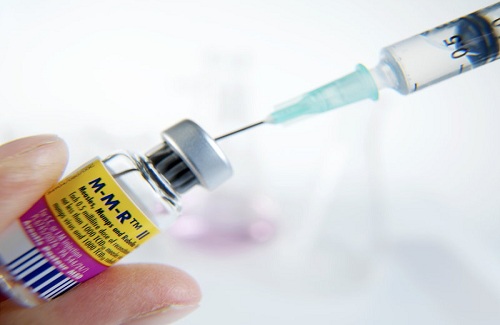
BCG Vaccines
BCG means Bacille Calmette Guerin Vaccine. This is used to protect from Tuberculosis and meningitis caused by it. The vaccine consists of the culture of the bacteria that causes tuberculosis in a very mild form. This initiates the immune system of the children, preventing any further attack.
Hepatitis B Vaccine
This vaccine is given to children to prevent liver disease caused by the Hepatitis B virus. Hepatitis affects the liver function and can lead to liver cancer, liver failure, and can even be fatal in some cases. Not just this, the infection is communicable. The first dose of the vaccine is given at birth. One such vaccine is RECOMBIVAX HB Hepatitis B, which is made of genetic recombination with the help of the yeast. A total of three doses are needed at different intervals.
Oral Polio Vaccine
This is given for the prevention of polio disease in the children. It is either administered orally (by mouth) or via injection. The vaccine is composed of a non-wild strain of the virus that causes polio. It helps in the production of antibodies in the body. A total of four doses are required. The first is given at birth.
DPT Vaccine
This is given for protection against Diphtheria, Tetanus, and Pertussis. It is a combination of three antigens including Diphtheria toxoids, Tetanus toxoid, and Pertussis. The inactivated form is administered in the body. After having the vaccine, the antibodies are produced to fight the infection. Three doses are required followed by a booster dose. The first dose is given at the age of six weeks.
Rota V Vaccine
To protect against Rotavirus infection, which is responsible for severe diarrhoea in children. It is made of 5 strains of inactivated rotaviruses. It is made using DNA technology. 3 doses are needed, the first being at 6 weeks.
Hep A Vaccine
This is an essential vaccine to prevent chronic liver infections which protect from Hepatitis A Virus. A sterile suspension of the inactivated virus is used to make this vaccine. This also needs three doses and the first is given at the age of 12 months.
Some preventive measures to be taken before taking your child for vaccination:
- Make sure the hospital or the centre where the vaccination is going to take place should have all the facilities to store the vaccines safely.
- It is a must to inform the doctor about any adverse reactions that the baby might have had to any previous dose.
- Always check the expiry date of the vaccine which is going to be used for the baby. Expired vaccinations can seriously harm the child.
- Consult the child’s paediatrician before getting the vaccination done to examine if there is any illness.
- For DPT vaccines, it is important to inform the doctor if the baby had any fits or convulsions.
Vaidam Health is an online mediator helping you to get an accurate treatment in India with a pleasant experience. Right from choosing the best hospital and the best doctor, to the drop off to the airport before you leave back to your home, Vaidam is here to assist you for everything. The patients need to post a query on the website, and they receive a call back by a case manager. Thereafter, the case manager will assist in everything.
Other than from accommodation options in the country, we also help in visa application, pick up and drop from the airport and keep a tab of all the recreations that you require on your medical tour to India.
Written by
Dr. Kavreen Arora
Vaidam Health · Updated 25 Sept 2026
Content meets the Vaidam Policy and is medically reviewed
Medically reviewed by
Dr. Bhawana Mittal Chat
Chat