

Cataract Treatment in India
WHAT IS CATARACT
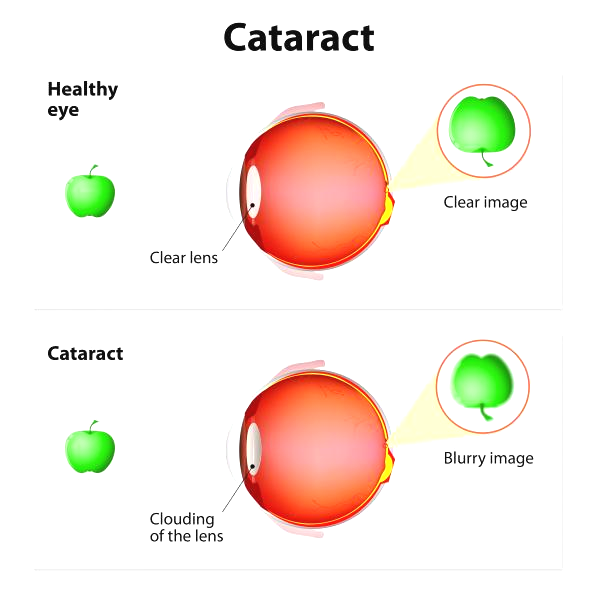
Cataract is caused by clouding in the natural lens of human eyes. This lens lies behind the iris and the pupil and is one of the major causes of vision loss in human beings.
FORM_CODE
OVERVIEW OF HUMAN EYE
Eyes are our organ of sight. It has a number of components which include cornea, iris, pupil, lens, retina, macula, optic nerve, choroid and vitreous.
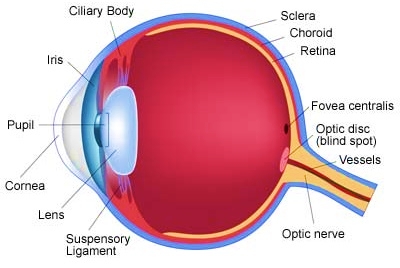
Cornea :It is mainly responsible for focusing the light in our eyes. It is the clear front surface of the eye, which acts like a camera lens.The colored iris and the pupil (which is a black dot) can be seen clearly through the cornea. The cornea basically helps to focus the entering light on the retina, which is a light sensitive film, located at the back of the eye. The picture formed at retina is then passed on to the brain.
However, when the cornea is damaged or diseased it becomes less transparent or can change in shape preventing the light from reaching the retina and transmitting a distorted or an unclear image to the brain.
Iris :of the eye functions like the diaphragm of a camera, controlling the amount of light reaching the back of the eye by automatically adjusting the size of the pupil.
Accommodation :The eye's crystalline lens is located directly behind the pupil and further focuses the light, through a process called accommodation. This lens helps the eye to automatically focus on the near and approaching objects, similarly like an autofocus camera lens.
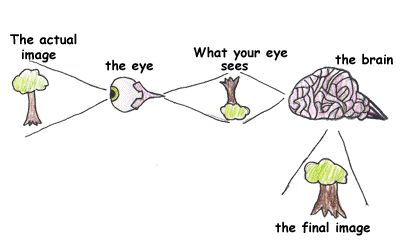
Retina :Light focused by the cornea and crystalline lens (and limited by the iris and pupil) reaches the retina. The retina acts like an electronic image sensor of a digital camera, converting optical images into electronic signals. The optic nerve then transmits these signals to the visual cortex, the part of the brain that controls our sense of sight.
TYPE OF CATARACT
Different types of cataract are as follows
- A subcapsular cataract occurs at the back of the lens. People with diabetes or those taking high doses of steroid medications have a greater risk of developing a subcapsular cataract.
- A nuclear cataract forms deep in the central zone (nucleus) of the lens. Nuclear cataracts usually are associated with aging.
- A cortical cataract is characterized by white, wedge-like opacities that start in the periphery of the lens and work their way to the center in a spoke-like fashion. This type of cataract occurs in the lens cortex, which is the part of the lens that surrounds the central nucleus.
FORMATION OF CATARACT
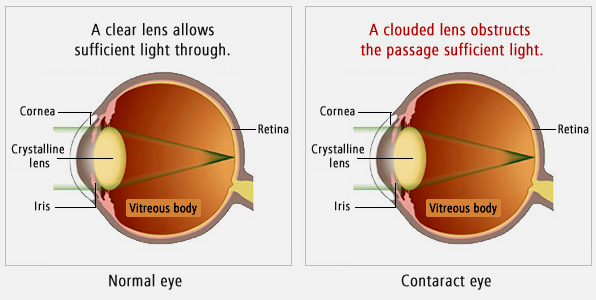
The lens present inside the eye works a lot like a camera lens, focusing the light onto the retina for clear vision .Lens is mostly made of water and protein, and the protein is arranged in a specific way that will keep the lens clear and allows the light to pass through it.
The lens, where the cataracts form, is positioned behind the iris (colored part of the eye) .Cataract scatters the light as it passes through the lens, preventing a sharply defined image from reaching the retina, as a result, vision becomes blurred.
RISK FACTORS
Risk factor for cataract include
-
Advancing age
-
Heavy alcohol use
-
Smoking
-
Obesity
-
High blood pressure
-
Previous eye injuries
-
Family history of cataracts
-
Over exposure to sun
-
Diabetes
-
Exposure to radiation from X-rays and cancer treatments
-
Prolonged use of corticosteroid medications
-
Statin medicines used to reduce cholesterol
CATARACT SYMPTOMS
Cataract begins slowly and initially has very little effect on the vision.
-
A decrease in the clarity of vision that is not correctable with glasses
-
Colors that appear faded or washed out
-
Sensitivity to light, glare, and halos around lights
-
Frequent changes to eyeglass prescriptions
-
Blurry, misty or cloudy vision.
-
Vision affected by small spots or patches
-
Reading becomes gradually impossible
-
Double vision in one eye(rear cases)
DIAGNOSIS
Diagnosis is based on
Detailed patient history & examination
This includes looking for signs, symptoms and any associated risk factors
Investigations
-
Visual acuity test: It is done to examine how clearly and accurately a person can she (sharpness of vision).
-
Slit lamp examination: It is a method to see the eyes through an illuminated slit light.
-
Retinal examination: The eye is dilated to have a bigger view of it.
CATARACT TREATMENT
Mostly the cataract treatment will depend on its cause.
Conservative treatment
This includes lifestyle modification.
Medical care
This includes
Early stage cataract: When symptoms start to appear, patient may be able to improve their vision for a while by using new glasses, strong bifocals, magnification, appropriate lighting or other visual aids.
Advance stage cataract: When the cataract is at advance stage the only treatment option is surgery.
Cataract Surgery
Cataract Surgery is mostly recommended when cataracts disturbs a person from performing the day to day activities such as reading or driving. The surgical procedures which are performed are :
On the day of the procedure
-
On the day of the procedure, the pupil of patient will be dilated. The dilation may also have an anesthetic effect on the eye.
-
During the operation the patient will just see a bright light but will not know what is happening.
-
The type of lenses that may be used to during the surgery are
-
Monofocal lens
-
Multifocal lens
-
Adjusting lens
Procedure
-
Surgeon makes a tiny cut in the eye.
-
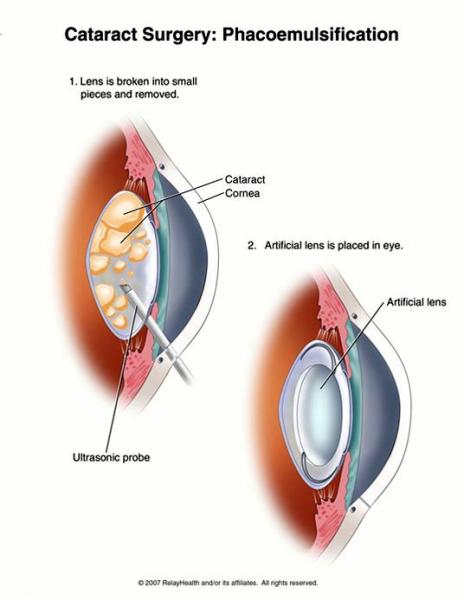
After that the surgeon inserts a minute probe in the cut. This probe gives out ultrasound waves which break the cloudy cataract and then small pieces are sucked out.
-
The artificial lens is then inserted in through the cut.
-
The whole process takes almost 30 minutes.
-
Right after the surgery the patient wears eye pads.
After the procedure
-
There is immediate improvement in the vision.
-
The cut which is made needs stitches occasionally but generally it heals by itself.
-
Vigorous activity should be avoided.
-
Patient is advised to go for an eye check –up after a few days.
Cataract Treatment in India
With high end medical technology, infrastructure and expert opthalmologists, the opthalmology hospitals in India provide their patients with the most appropriate cataract treatment and patient care. Because of the various affordable medical treatments provided by India, it is one of the most trusted medical tour destinations in the world.
The opthalmologists in India are not only experts in their own field with years of experience but are also well acclaimed for their various research, contribution and successful delivery of eye treatment.
Know More:
Cost of Cataract Treatment in India
Cataract treatment in India is done in an affordable cost of USD 1000. To know about the medical travel package in details click here.
COMPLICATIONS
Complication of cataract include
-
Stress and interference in day to day activities (driving, reading etc)
-
Anger ,guilt, frustration, depression
-
Expensive treatment (for economically deprived)
PREVENTION
Cataract can be prevented by
-
Protect the eyes from UVB rays by wearing sunglasses outside
-
Have regular eye examination
-
Stop smoking
-
Increasing the intake of fruits and vegetables
-
Maintain a healthy weight
-
keep diabetes and other medical conditions in check
MYTHS & FACTS
Myth: Cataract can be removed by eye drop.
Fact : Surgery is the only proved method to remove cataract.
Myth: Cataract surgery is dangerous.
Fact: Cataract surgery is a little complicated but it is one of the safest and most successful surgeries done across the world.
MYTH- It takes months to recover from the cataract surgery.
FACT: In case of a cataract surgery the patient can resume daily activities within few days after the operation.
REFERENCES
-
http://www.webmd.com/eye-health/cataracts/health-cataracts-eyes?page=2
-
&sa=X&ved=0ahUKEwjW2LP9w4_OAhVMsY8KHVciB3EQ_AUIBigB#imgrc=6-q7WZ7A0Zge6M%3A
-
http://www.preventblindness.org/sites/default/files/national/documents/fact_sheets/MK08_CatFacts.pdf
Written by

Pooja Chaudhary
Vaidam Health · Updated 25 Sept 2026
Dr. Pooja Chaudhary is a well known health blogger. She writes for some of the well known medical sites in India and US.
Content meets the Vaidam Policy and is medically reviewed

Medically reviewed by
Dr. Bhawana Mittal Chat
Chat