

Woman with Oncogene Gave Birth to Twins without the Mutation
Eight years ago, Bengaluru’s Swayam Prabha came to know that she carries the cancer-causing BRCA1 mutation and was tensed about not passing on the oncogene to children. With the help of modern medical techniques, she gave birth to twins in Jaslok Hospital who don’t carry the mutation- the first case of its kind in the country.
“My mother has cancer and her sisters passed away due to this. I have BRCA1 (Breast CAncer gene) mutation but this cancer cycle will end with me. My children have been spared,” said 37-year-old Swayam.
In Swayam’s case, IVF specialist Dr. Firuza Parikh and her team screened the embryos for the absence of BRCA1 mutation. The pre-implantation genetic tests were done and embryos without BRCA1 mutation were transferred into the womb.
“With IVF, we managed six embryos for Swayam. While two carried the mutation and the remaining two didn’t”, said Dr. Parikh. She added,”Swayam’s case is the first in India where the threat posed by oncogenes was removed. PGT (Preimplantation Genetic Testing) has been used to keep out BRAC1 and BRAC 2 genes in roughly 150 cases worldwide.”
“My mother’s sisters, cousins and uncle had cancer. Doctors at Tata Memorial Centre in Parel asked me and my siblings to undergo genetic test for oncogenes,” said Swayam.
Procedure of Pre-Implantation Genetic Testing (PGT)
PGT is used prior to implantation to identify genetic defects in embryos. The steps involved in Preimplantation Genetic Diagnosis are:
- Cells are microsurgically removed from 5 days developed embryos. After this, embryos are frozen.
- DNA of cells is done to determine if there’s problematic gene in each embryo. This process takes at least 5-7 days.
- Once embryos free of genetic problems are identified, it will be placed in the uterus.
- Additional embryos which are free of genetic problems are frozen for later use while embryos with the problematic gene are destroyed.
Written by

Manpreet Kaur
Vaidam Health · Updated 25 Sept 2026
Manpreet Kaur is an Engineer by education but found her interests in research and writing. Her prolific career spans the world of health, travel and digital marketing. She is a music lover who can be found with headphones on at any time of the day. If not found in office, then it is for sure she had packed her bag and is on trip to quench her thirst for adventure.
Trying to extract the best out of life, she has eclectic mind trapped in a peripatetic body.
Content meets the Vaidam Policy and is medically reviewed
Medically reviewed by
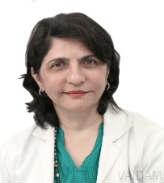
Dr. Firuza ParikhObstetrician and GynaecologistDr. Firuza Parikh is a well-known Gynecologist with over 44 years of experience. Her special interests include ICSI, Genetics, Preimplantation Genetics Testing, Female Genital Tuberculosis, Repeated Miscarriages, Repeated Implantation Failure, Male Factor Infertility, etc. Dr. Parikh is a pioneer in India for Pre-Implantation Genetic Screening with a particular interest in the treatment of Leigh's Syndrome, Thalassemia, Monogenic Diseases like Huntington's Chorea, Cancer Mutations like BRCA1 and BRCA2, Hemophilia, Duchenne's Muscular Dystrophy.
Read more → Chat
Chat