

What Are the Symptoms of a Brain Tumor?
A cluster or mass of abnormal cells in the brain is referred to a brain tumour. These brain tumours are of several types such as benign and malignant. They can also be primary or secondary (arising in some other part of the body and then spread).
General signs and symptoms
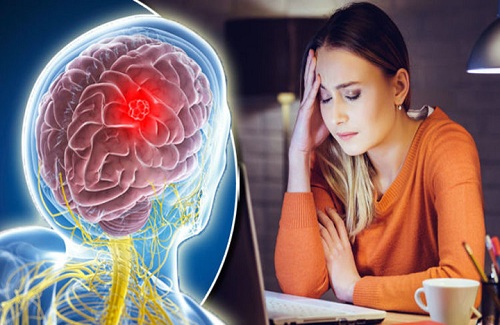
The signs and symptoms associated with a brain tumour may vary greatly depending upon the type of brain tumour, its location, grade, size etc. However, some general signs and symptoms include,
Headache - The extent may vary from mild to severe. It mainly occurs after physical exertion or in the early morning.
Seizures - The type of seizures may also vary with individuals. Some most commonly occurring seizures are:
- Myoclonic - These are single or multiple muscle twitches, jerks or spasms.
- Tonic-clonic - These are manifested as loss of consciousness, body tone, and muscle contractions. There is also a loss of control in body functions like bladder control.
- Sensory - There is a change in sensation, vision, smell or hearing.
- Complex partial - There is loss in awareness or consciousness.
Mood swings - The personality and behaviour can also be greatly affected due to a brain tumour. This includes increased irritation, lethargy, lackadaisical attitude, the sudden switch in the mood. Mood swings happen when the tumor occurs in certain parts of the cerebrum, frontal lobe and temporal lobe.
Fatigue - Fatigue may include signs such as feeling exhausted all the time, heaviness in the limbs, weakness, sleeping during the day, and inability to focus.
Meanwhile, there may be some other symptoms that are specific to the location of the tumour. These are:
- Loss of balance and reduced motor skills linked with the tumour
- Pressure or headache around the tumour
- Changes in the sense of judgement
- Sluggish behaviour
- Complete or partial loss of vision
- Changes in speech, hearing, memory or emotional state
- Altered sense to touch or pressure
- Weakness in arm or leg on one side of the body
- Lactation and altered menstrual cycle in women.
- Difficulty in swallowing, facial weakness and numbness
- Double vision
- Unexplained nausea or vomiting
- Confusion
- Hearing issues
How is it diagnosed?
You must consult a neurologist if you notice any of the above symptoms for a long time. After suspecting the tumour, some of the best neurosurgeons in India recommend the following tests.
- Neurological exam - It includes an examination of vision, hearing, balance, coordination, strength and reflexes.
- MRI (Magnetic Resonance Imaging)- This is mostly used to diagnose brain tumours. In some cases, a dye may also be injected through the vein in the arm just before the scan.
- Computerized tomography and PET scan - sometimes these can also be recommended in addition to the MRI in certain complex cases.
- Biopsy of abnormal tissue - Biopsy can also be done to confirm the presence of abnormal cells as a part of which, a small needle is inserted by drilling a hole in the skull. The abnormal tissue is taken out with the help of a needle. This sample is then sent to the laboratory where it is observed under the microscope is diagnosis is made.
- Cerebral arteriogram - This is also a type of x-ray or a series of x-rays of the head detecting the arteries in the brain. A special dye is injected into the main arteries after which the x-ray is taken.
- Lumbar Puncture or spinal tap - cerebrospinal fluid or CSF is extracted by using a needle to analyse tumour cells, blood or tumour markers.
- Myelogram - This is recommended to check the spread of the tumour to the spinal fluid and other parts of the brain.
- Molecular testing of tumour - Sometimes the tumour samples are used to identify specific genes, proteins and other factors such as tumour markers.
Choosing the best neurosurgery hospitals in India is not an uphill task because the country has several JCI and NABH accredited hospitals. All these hospitals are clean, hygienic, and provide accommodations for a comfortable stay.
Written by
Dr. Kavreen Arora
Vaidam Health · Updated 25 Sept 2026
Content meets the Vaidam Policy and is medically reviewed
Medically reviewed by
Dr. Bhawana Mittal Chat
Chat