


In today's world of digital health and innovative technology, personalised medicine is changing faster than ever before. At first, this type of care mainly focused on a person's genes, using DNA to determine the best treatment. But now, it's expanding to include much more than just genetics.
In modern personalised healthcare, the whole lifestyle, including daily routine, surroundings, and even eating, sleeping, and movement patterns, is examined. This picture helps doctors create more accurate and effective treatment plans for each person.
A global study indicates that over 60% of healthcare executives think that lifestyle-driven, individualised treatment will play a significant role in clinical practice during the next five years. This change reflects our increasing awareness that our daily decisions impact our health and DNA.
So, what exactly is personalised medicine beyond genetics? In this blog, we'll explore how data from fitness trackers, sleep apps, diet logs, and other everyday tools are helping doctors design care that's genuinely tailored to the individual, marking a decisive move toward smarter, more human-centred healthcare.
What is Personalised Medicine?
Personalised medicine, sometimes referred to as individualised medicine, focuses treatment choices on each patient's particular characteristics. These characteristics involve genes, lifestyle, and environment. The aim is to select the best treatment for each patient to maximise results and minimise adverse effects.
Personalised medicine typically begins by analysing a person's genetic makeup through a process known as gene mapping. This helps doctors understand a patient's response to various medications, allowing them to select the treatments that are most likely to work well.
Although genetic information is still crucial, lifestyle data, including dietary, sleep, stress, and exercise patterns, is now used in personalised treatment. Doctors can make even better treatment decisions by integrating all of this data to provide a comprehensive picture of a patient's condition.
Do You Know?
- Personalised treatments based on genetic data have been shown to increase cancer treatment success rates by up to 50%.
- Personalised medicine can reduce adverse drug reactions by up to 60% by ensuring the proper medication is prescribed based on genetic factors.
- Over 70% of patients prefer treatments tailored to their genetic and lifestyle information, according to global surveys.
Why Genetics Alone Isn't Enough?
Personalised genetic medicine has transformed fields including cardiology, oncology, and rare disorders, but its drawbacks are becoming more widely acknowledged. The whole picture is not only genetic information. Due to lifestyle variables, including what they eat, how active they are, how well they sleep, and the surroundings they live in, two persons with essentially similar genetic makeups may still experience significantly different health outcomes.
Additionally, most chronic diseases, like diabetes, heart disease, and obesity, are multifactorial, meaning they result from a complex interplay of genetic predispositions and lifestyle factors. Relying solely on genomic data can result in personalised treatment strategies that overlook crucial external influences. Recognising this, the medical community is shifting toward a customised approach that includes continuous data gathering from real-world, day-to-day life.
The Role of Lifestyle Data in Personalised Treatment
Modern medicine is shifting toward a personalised approach that incorporates multi-dimensional data. With the widespread use of wearable technologies and health-tracking applications, doctors now have access to vast amounts of personalised health data beyond what our genes reveal.
Key Lifestyle data being used:
- Exercise and Activity: Fitness trackers measure heart rate and physical activity to monitor cardiovascular health.
- Nutrition: Apps for tracking diet, hydration, and caloric intake, all of which impact diabetes, weight management, and metabolic health.
- Sleep: A number of chronic illnesses are associated with poor sleep quality. Sleep data may be crucial for diagnosing and treating diseases.
- Stress and Mental Health: Surveys and mood trackers help in understanding the psychological aspects of health.
- Environment: Location-based data can be used to analyse pollution exposure, climate impact, and access green spaces.
A new generation of individualised treatment plans is being produced as a result of this data convergence.
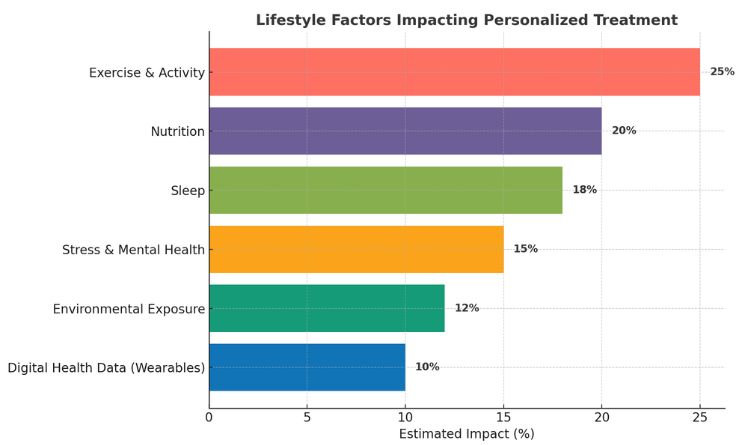
This chart illustrates the estimated percentage impact of key lifestyle factors on shaping personalised treatment plans.
Why Lifestyle Data Matters So Much?
While our genes give us a starting point, it's our daily habits, like diet, exercise, and sleep, that shape our health. Lifestyle choices greatly influence how diseases develop and progress. Here's why it matters:
- Modifiability: Unlike DNA, lifestyle factors, such as what we eat, how we sleep, and activity levels, can be improved. This means treatment isn't just about medication but about real-life changes that we can control.
- Real-Time Feedback: Digital tools can be used to monitor progress and adjust the personalised treatment plan as needed.
- Complete Understanding of Health: Being healthy isn't just physical; it includes mental and social well-being. When lifestyle data is included, doctors can address root causes, not just symptoms.
- Bridging Gaps between Prediction and Prevention: Lifestyle data helps turn prediction into prevention, while genetic testing tells the risks. It's the bridge between knowing what might happen and making sure it doesn't.
By embracing lifestyle changes alongside medical care, we take control of our health, turning potential risks into proactive steps toward a healthier future. The power to shape our well-being lies in the choices we make every day.
Integrating Lifestyle Data with Genetic Information
Integrating genetic and lifestyle data to create a multi-layered, all-encompassing picture of a person is a significant breakthrough in personalised medicine. This integration is changing the definition of treatment in the following ways:
- Better Risk Assessment: Combining lifestyle factors with genetic markers allows for more precise patient grouping into risk groups.
- Personalised Treatments: Treatments can be tailored to match both the biology and daily life of the individual, making it more effective and sustainable.
- Smarter Decisions: By analysing large volumes of genetic and lifestyle data, doctors can uncover insights that guide better medical decisions.
- Behaviour-Informed Care: Understanding behaviours helps healthcare teams create strategies that are more likely to be followed, such as reminders, coaching, or goal tracking.
This holistic approach to healthcare empowers patients with treatments that are not only scientifically grounded but also aligned with their unique lifestyles, leading to better outcomes and long-term health improvements.
Technologies Enabling Lifestyle-Integrated Personalised Medicine
Technological advancements have made it easier to gather and share lifestyle data. Several tools and platforms are helping make personalised care a reality.
- Wearable Devices: Devices like fitness trackers and smartwatches continuously record details like movement, heart rate, sleep quality, and stress levels.
- Genetic Testing Tools: Genetic tests are now widely available and reasonably priced, enabling people to discover their health risks and the potential reactions of their bodies to various therapies.
- Digital Platforms and Health Apps: Contemporary health apps allow users to monitor eating habits, physical activity, sleep patterns, and emotional states. Additionally, several of these apps offer tailored guidance based on user information.
After reviewing this data from these technologies, doctors can provide more insightful advice, assisting patients in making minor adjustments that eventually result in significant gains.
Ethical and Privacy Considerations
As personalised medicine starts using more data from our daily lives, it's essential to consider privacy and ethics. Devices like smartwatches and health apps collect detailed, personal information in real time, like sleep patterns, heart rate, and even a person's location. This data can reveal a lot about anyone's life, so it must be kept safe, used responsibly, and only shared with explicit permission.
To protect patients, healthcare workers, app developers, and tech companies collaborate to create clear rules. These rules focus on trust and privacy and give people control over their health information.
The Future of Personalised Medicine
As personalised medicine research advances, the combination of lifestyle data and genetic information will become increasingly complex. Future developments will enable even more precise treatment plans that consider a greater variety of lifestyle characteristics, including environmental influences, socioeconomic status, and access to healthcare.
Additionally, machine learning techniques and artificial intelligence (AI) are anticipated to be essential in analysing large databases containing lifestyle and genetic data. These technologies will make it easier to spot complex health patterns and predict future health problems more accurately. This means doctors can choose better treatments, leading to faster recovery and improved patient results.
Final Thoughts
Personalised medicine is revolutionising healthcare by adopting a more customised, comprehensive perspective on each person's health rather than the conventional one-size-fits-all strategy. By integrating genetic information with lifestyle data, doctors can develop more focused, efficient treatments that target both the genetic aspects and behavioural factors affecting patients' well-being.
With the advancement of technology, personalised medicine holds great potential to improve health outcomes. It offers hope for a future where treatments are tailored not only to our genes but also to our lifestyle choices.


 Chat
Chat