

Diabetes Treatment in India
WHAT IS DIABETES?
Mostly referred to as diabetes mellitus, it is a group of metabolic diseases in which a person is having hyperglycemia, commonly known as high blood sugar level. This is because the insulin production in the body is inadequate, or because the body's cells do not respond properly to insulin, or it can be both.It is a chronic, lifelong condition that will affect the body’s ability to use the energy found in the body.
FORM_CODE
METABOLISM DISORDER IN DIABETES
Diabetes is a disorder of the body’s metabolism, that is, the way the body is able to use its digested food for energy. Digestive tract breaks down the carbohydrates (sugars and starches) present in many food into glucose, which is a form of sugar that enters into the bloodstream.
Glucose: This is produced from the breakdown of the digested food & provides energy to the body, acting as a fuel for the body.
Insulin: It is a hormone (chemical messenger) that helps the cells all over the body to absorb glucose and use it for energy. This hormone is made in the pancreas, an organ located behind the stomach.
Pancreas: They contain clusters of cells called islets. Beta cells within the islets make insulin and release it into the blood. If these beta cells don’t produce sufficient insulin, or the body is not able to respond to the insulin that is present, then the glucose instead of being absorbed by the cells, it builds up in the blood, leading to prediabetes or diabetes.
Prediabetes: is a condition in which the blood sugar level is higher than normal but not high enough to be diagnosed as diabetes. Prediabetes is likely to develop into type 2 diabetes in approximately 10 years or less. It has no signs & symptoms.
TYPES OF DIABETES
There are different types of diabetes, some of which are more prevalent than other:
TYPE 1 DIABETES
It is an autoimmune disease, which is more common in children. People suffering from Type 1 diabetes are usually under the age of 20, it is usually presenting itself when the person is a young adult.
Causes
This is caused by a fault in the body’s immune system , because of which the insulin producing beta cells, present in the pancreas are destroyed, allowing the body to produce very little insulin or no insulin at all to adequately regulate the blood glucose levels of the body.
Symptoms
Type 1 diabetes patients should get immediate treatment as any delay in treatment could be fatal:
- Thirst more than a normal person
-
Feeling tired all day
-
Frequent urination
-
Unexplained weight loss
-
Genital itchiness
Diagnosis
If a patient shows any signs of diabetes, then the patient is advised to go for blood test or urine test to diagnose diabetes. If the type of diabetes is unclear, then the patient is advised to for:
-
Ketone test
-
GAD autoantibodies test
-
C-peptide test
Type 1 diabetes develops quickly within children & young adults, a diagnosis of type 1 diabetes should be followed by same day referral to a pediatrician!
Treatment
In type 1 diabetes, insulin treatment is important. As the pancreatic cells that produce insulin are destroyed, people will have this disease for life time. Patient will require treatment in the form of insulin shots or insulin pump, along with that regular exercise, & careful attention to diet is very important to prevent blood sugar fluctuations.
Several types of insulin are available, these are:
Initial treatment begins with two injections a day of two different types of insulin, which will progress to three or four shots a day.
Complications
Type 1 diabetes is a serious condition, which carries a risk of both long term & short term complications. Complications are all related to
Short term complications
This happens when the blood glucose levels in the body go too low or if insulin injections are missed. Complications include:
-
Hypoglycemia: Low blood sugar levels
-
Ketoacidosis
Long term complications
Long-term complications develop gradually, over decades. Diabetes complications can be disabling or life threatening. These complications include:
-
High blood pressure
-
Stroke
-
Skin & mouth infections
-
Sexual dysfunction
-
Nerve damage (neuropathy)
-
Kidney damage ( nephropathy)
-
Eye damage
-
Cardiovascular diseases
-
Gastroparesis (delayed gastric emptying), a type of neuropathy
-
Depression
TYPE 2 DIABETES
It is a life -long, progressive condition in which the body becomes resistant to the normal effects of insulin and/or gradually loses its ability to produce sufficient insulin in the pancreas. If this type the body does not uses insulin properly. This is also called as insulin resistance.
Causes
Insulin is a hormone produced in the pancreas by special cells, called beta cells. Initially, pancreas makes more insulin to try to get glucose into the cells. But eventually it can't keep up, and the sugar builds up in your blood instead.
-
Age :being over the age of 40 (over 25 for south Asian people)
-
Genetics :having a close relative with the condition (parent, brother or sister)
-
Weight :being overweight or obese
-
Ethnicity
-
Woman who had given birth to a child over 4.5 kgs (9 lbs.), or had gestational diabetes during pregnancy, or had a condition known as Polycystic Ovarian Syndrome.
Symptoms
Most of the people suffering from type 2 diabetes shows have no symptoms at all. The signs & symptoms include:
-
Excessive thirst
-
Frequent urination
-
Feeling tired ,lethargic,diziness
-
Always feeling hungry
-
Slow healing wounds
-
Itching, skin infections
-
Blurred vision
-
Gradually putting on weight
-
Mood swings
-
Headaches
-
Leg cramps
Diagnosis
Person is suspected with diabetes if the blood sugar level is higher than 200 milligrams per deciliter (mg/dL). To confirm the diagnosis, one or more of the following tests will be advised
-
Oral glucose tolerance test
-
Fasting blood sugar
-
Two –hour postprandial test
-
Random blood sugar
-
HemaglobinA1C test
Treatment
The first line of treatment for diabetes type 2 is lifestyle modifications & medications. If the blood sugar levels are very high then the patient is advised to go for the second line of treatment, Insulin.
First step of treatment
-
Weight loss
-
Dietary changes
-
Physical activity
-
Metformin medication
If life style modifications & metformin is not able to control the blood sugar levels then an additional drug will be prescribed.
Insulin
If a patient’s blood sugar level is not controlled by lifestyle modifications & medications, then the person is advised to go for insulin shots.
Complications
People with diabetes have an increased risk of developing a number of serious health problems
Short term complications
This happens when the blood glucose levels in the body go too low or if insulin injections are missed. Complications include:
-
Hypoglycemia: Low blood sugar levels
-
Ketoacidosis
Long term complications
Long-term complications develop gradually, over decades. Diabetes complications can be disabling or life threatening. These complications include
- High blood pressure
-
Stroke
-
Skin & mouth infections
-
Sexual dysfunction
-
Nerve damage (neuropathy)
-
Kidney damage ( nephropathy)
-
Eye damage
-
Cardiovascular diseases
-
Gastroparesis (delayed gastric emptying), a type of neuropathy
-
Pregnancy complications
GESTATIONAL DIABETES
It is a type of diabetes that some women develop around 24 to 28 (third trimester) weeks of pregnancy& usually disappears after the baby is born. It has been seen that somewhere between 2 to 10 percent of expectant mothers develop this condition, making it one of the most common health problems of pregnancy. Gestational diabetes causes high blood sugar that could affect the pregnancy and also the baby's health
Causes
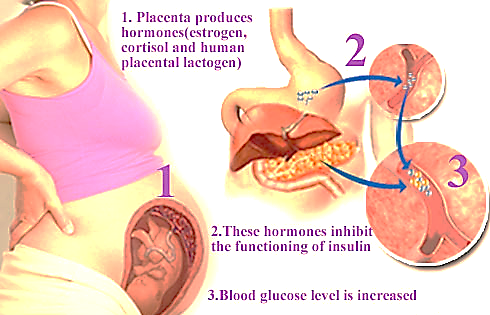
During pregnancy, the placental hormones causes a buildup of sugar in the blood. Mostly, the pancreas will be able to handle the insulin made by it. But if it is not able to handle then, the blood sugar levels will rise and cause gestational diabetes.
Who is at risk?
-
Patient was overweight before pregnancy
-
Rapidly gained weight during pregnancy
-
Having a parent, brother, or sister with type 2 diabetes
-
Blood sugar levels are high, but not high enough to be diagnosed with diabetes, this is called as prediabetes
-
Past history of gestational diabetes
-
Patient is over the age 25
-
Giving birth to a baby weighing more than 9 pounds
-
Suffering from polycystic ovary syndrome (PCOS).
Symptoms
Most of the times gestational diabetes doesn’t cause any symptoms. Patient will be screened for diabetes around 8-12 weeks of pregnancy. If a patient is at increased risk of gestational diabetes then she will be advised to go for a full test, which will be done in the third trimester (24-28 weeks) of pregnancy. Symptoms include:
-
Increased thirst
-
Urination
-
Hunger
Diagnosis
To test for gestational diabetes, patient will be advised to drink a sugary drink. This will raise the blood sugar levels of the body. After one hour, a blood test is done to check for the sugar levels in the body. If the result shows that the blood sugar levels are 140 milligrams per deciliter (mg/dL) or more, then the patient will be advised to fast for a few more hours and then get another blood test done.
If a patient gets normal results, but is at a high risk of getting gestational diabetes, then they need to go for a follow-up test later in their pregnancy.
Treatment
Gestational diabetes can be controlled with a healthy diet and regular exercise. Still, some women will need medication to keep their blood glucose levels under control.Following treatment plan is to be followed
-
Blood sugar levels have to be checked four or more times a day
-
Urine tests is done to check for ketones
-
Healthy diet plan is to be followed
-
Regular exercise
-
A regular track of weight gain should be kept
Complications
Following complications can be caused:
-
An extra-large baby
-
Cesarean (C-section) delivery
-
Early (pre-term) baby
-
Chances of respiratory distress syndrome in babies
-
High blood pressure(Preeclampsia)
-
Low blood sugar(Hypoglycemia)
-
Chances of having type 2 diabetes later in life
Diabetes Treatment in India
One of the best medical travel destinations in The world, India provides with the most advanced hospitals and expert doctors for diabetes treatment.
While the country houses several eminent hospitals consisting of latest medical technology, infrastructure and facilities, it also harbours well qualified and experienced doctors who provides their patients with proper diagnosis and treatment.
COST OF DIABETES TREATMENT IN INDIA
Proper diagnosis and medication for diabetes are recieved in India at a much affordable cost that ranges from USD 200 - 400.
FACTS ON DIABETES
-
It has been noted that about one third of all the people suffering from diabetes do not even know they are suffering from disease.
-
If a person is at risk, then type 2 diabetes can be prevented with a moderate weight loss , healthy eating and 30 minutes of moderate physical activity (such as brisk walking) daily.
-
Diabetes is one of the leading cause of blindness in working-age adults.
-
Type 2 diabetes does not have any symptoms.
-
People with diabetes are twice more likely to develop heart disease than someone without diabetes
-
Keeping diabetes under control can significantly reduce the risk of developing complications and prevents complications from getting worse.
-
Bariatric surgery can reduce the symptoms of diabetes in people suffering from obesity\
REFERENCES
http://www.medicalnewstoday.com/info/diabetes
http://www.webmd.com/diabetes/type-1-diabetes-guide/type-1-diabetes
http://www.everydayhealth.com/type-1-diabetes/guide/complications/
http://www.diabetes.org/diabetes-basics/type-2/?referrer=https://www.google.co.in/
https://www.nlm.nih.gov/medlineplus/ency/article/000313.htm
http://www.nhs.uk/conditions/gestational-diabetes/Pages/Introduction.aspx
http://www.niddk.nih.gov/health-information/health-topics/Diabetes/causes-diabetes/Pages/index.aspx
http://www.joslin.org/info/10_Things_You_Might_Not_Know_About_Diabetes.html
Written by

Pooja Chaudhary
Vaidam Health · Updated 25 Sept 2026
Dr. Pooja Chaudhary is a well known health blogger. She writes for some of the well known medical sites in India and US.
Content meets the Vaidam Policy and is medically reviewed
Medically reviewed by
Dr. Bhawana Mittal Chat
Chat