

A Guide to Cancer Treatment in Turkey
One of the significant health issues of the 21st century is cancer, as it ranks as one of the world’s leading causes of death.
With a number of diseases that have genetic components, cancer in particular, takes away millions of lives annually, thus creating an urgent demand for innovative treatments, preventive strategies, and public awareness.
The latest advancements and world-class medical facilities at affordable costs in Turkey has led to tremendous progress in increasing survival rates through early detection initiatives and aggressive therapies.
Do You Know?
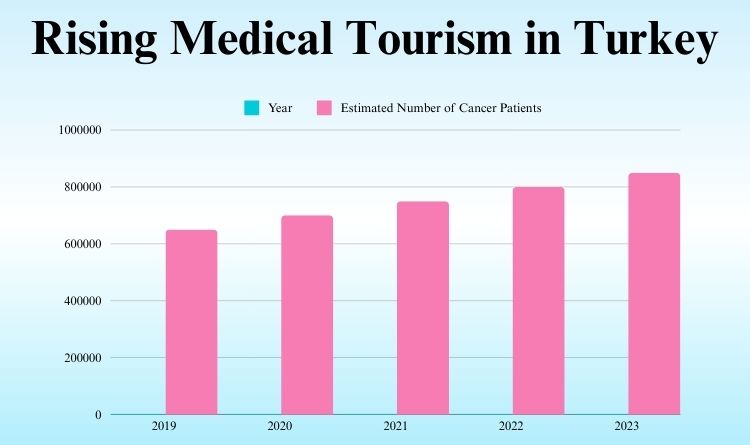
- More than 800,000 people travel to Turkey every year for medical purposes.
- The Ministry of Health (MoH) in Turkey has affiliated all state-owned “Training and Research Hospitals” with the University of Health Sciences. This affiliation helps integrate academic research and medical training with healthcare services, improving the quality of care and medical education.
- The MoH oversees 944 state hospitals, which play a critical role in providing healthcare services across Turkey.
- With 160,000 inpatient beds, Turkey’s state-owned hospitals can accommodate a large number of patients, which is especially important in meeting the needs of those seeking treatment for complex conditions such as cancer.
- The MoH employs over 1.24 million healthcare workers, including doctors, nurses, technicians, and administrative staff.
From innovative treatments like immunotherapy and precision medicine to affordable care compared to Western nations, Turkey has positioned itself as the most preferred destination for cancer.
This blog will help you plan your treatment for cancer in Turkey, providing practical insights and essential tips for your treatment journey.
Why Should You Choose Turkey for Cancer Treatment?
Hospitals with International Accreditation
Turkey has over 50 Joint Commission International (JCI)-accredited hospitals, which demonstrate a hallmark of quality and safety in healthcare. The Ministry of Health conducts biannual inspections, maintaining high safety and operational standards.
Cost-Effective Cancer Treatment
One of the biggest advantages of choosing Turkey is its affordable cancer treatment options. When you compare with western nations, the costs for diagnostics, therapies, and surgeries in Turkey are 40-50% lower. Thus, it makes Turkey an attractive destination for international patients without compromising on quality.
Advanced Treatment Options
Turkish oncology centres are renowned for using innovative treatment methods, including radiation therapies, minimally invasive surgeries, immunotherapy and targeted therapy.
Strategic Location and Accessibility
Turkey’s geographical location and visa-free access simplifies travel for medical tourists from countries like Switzerland, Israel, Iran, Georgia, and Finland, who can stay there for 90 days. This convenience removes logistics barriers and ensures a smoother treatment journey.
Immunotherapy for Cancer in Turkey has been very effective in treating advanced lung cancer, besides helping prolong survival in patients with lung cancer.
Combination Therapy
Combination therapy is a type of therapy which combines surgery, radiation, chemotherapy, targeted therapy, and immunotherapy as a whole. Combination of the Chemotherapy and Radiotherapy in Turkey increases treatment success rates while reducing side effects that a patient might suffer.
Advanced Treatment of Cancer in Turkey
CAR-T cell therapy
The top cancer centres in Turkey offer FDA-approved CAR-T therapies, including Kymriah and Yescarta, and are rapidly accruing patients to clinical trials for novel therapies.
CAR-T, like Kymriah, demonstrates high response rates in children and young adults with ALL, with overall remission rates over 80% in most series. The leading centres in Turkey report similar successes in their patient cohorts.
Success rates for CAR-T therapies like Yescarta and Kymriah were 50 to 70 per cent in the treatment of DLBCL among relapsed or refractory patients undergoing chemotherapy.
Data from a leading Turkish oncology center presented that a 65% complete remission rate was achieved with Yescarta among patients experiencing relapsed or refractory DLBCL, proving consistent with worldwide trends.
With this, we can conclude that the survival rate of the patients in Turkey is not different from that that occurs around the world. Most of the cancer research centers in Turkey return results showing higher overall survival (OS) and progression-free survival (PFS) rates for the complicated cancers.
Targeted therapy
Since cancer is induced due to genetic mutation, the modern oncology centers in Turkey use the correct genetic testing to identify the unique mutations in cancerous cells and pair it with the exact targeted drugs.
The FDA has cleared up to 110 targeted therapies for solid tumours, with lung cancer having the highest percentage at 29%, while breast cancer follows at 22.72%. To date, 62.72% of these treatments are now available in Turkey.
- Monoclonal Antibodies such as Herceptin (trastuzumab) are being used against HER2-positive breast cancer.
- Tyrosine Kinase Inhibitors (TKIs) such as Imatinib (Gleevec) have been approved for the treatment of chronic myeloid leukaemia (CML) and some other cancers.
- Angiogenesis Inhibitors such as Bevacizumab (Avastin) are used to target several types of cancer, including colon cancer.
Checkpoint inhibitors for Immunotherapy for Cancer in Turkey
PD-1 inhibitors such as Pembrolizumab and Nivolumab have achieved a success rate of about 20-40% in patients suffering from advanced NSCLC. Atezolizumab and Durvalumab have proven to be effective, with response rates of 30-40% in patients with advanced bladder cancer.
In Turkey, health insurance is available for PD-1/PD-L1 inhibitors, and they are only limited to the following: skin cancer, kidney cancer, and NSCLC.
A 2020 study conducted in Turkish hospitals indicated that the combination of Ipilimumab (CTLA-4) and Nivolumab (PD-1) led to complete response rates of 20%, with overall survival rates exceeding 50% at the 3-year mark.
- In a phase II study in Turkey, Atezolizumab had a response rate of 35% in metastatic urothelial carcinoma after chemotherapy.
- Pembrolizumab A Turkish oncology centre reported results where overall survival was increased by 20-30% than standard chemotherapy in recurrent or metastatic HNSCC.
Proton Therapy
Proton therapy is a sophisticated form of radiation therapy that employs protons instead of X-rays to treat cancer. Although proton therapy is available in Turkey, its number is confined to a few hospitals where patients have to travel to main towns for treatment.
Several large cancer treatment centres in Turkey are now installing the Varian ProBeam proton therapy system for brain tumours and prostate cancer treatment in Turkey.
Robot-assisted Surgery
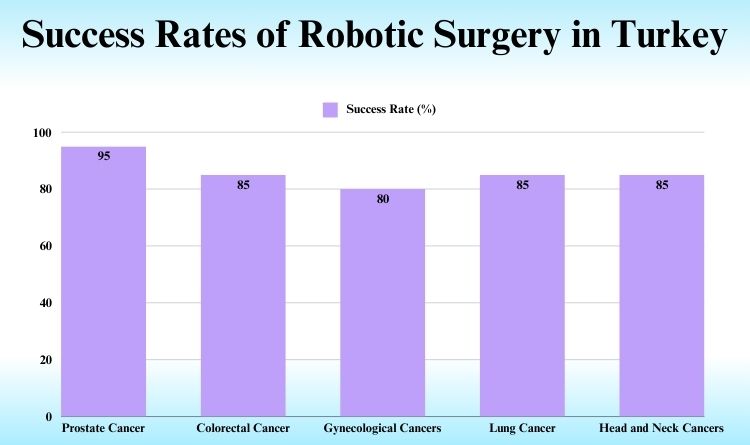
Minimally Invasive Cancer Surgery in Turkey is more advanced, one of them being the robotic surgical systems. It provides various robot-assisted surgeries for cancer treatments, such as da Vinci Surgical System, which performs minimally invasive surgeries for prostate, colon, liver, stomach, and ovarian cancers.
Rapidarc
The new advanced Intensity-Modulated Radiation Therapy (IMRT) is named RapidArc; the treatment helps provide more comfort and ease for the patient since it reduces radiotherapy sessions’ duration from 15–30 minutes to just two minutes.
Cancer Treatment Cost in Turkey
Turkey offers 50–70% savings compared to Western countries for the same quality of care. Some of the factors affecting the cost of cancer treatment in Turkey include:
- Type of Cancer and its stage
- Hospital and Location
- Treatment Approach
- Advanced Technology Used
- Treatment Packages
| Type of Treatment | Cost in USD |
| Chemotherapy | $ 2000-$ 2500 |
| Radiation Therapy | $ 3000-$ 4500 |
| Targeted Therapy | $9,000 |
| Breast Cancer Surgery | $ 6500-$ 7500 |
| Brain Tumor Surgery | $ 22000-$ 24000 |
| Prostate Cancer Surgery | $ 8000-$ 9000 |
| Colon Cancer Surgery | $ 22000-$ 24000 |
| Head and Neck Cancer | $ 2000-$ 15000 |
| Kidney Cancer Surgery | $ 4000- $10000 |
| Lung Cancer Surgery | $ 5000-$ 15000 |
Best Hospitals for Cancer Treatment in Turkey
If you are looking for top cancer hospitals in Turkey, here's a list for you.
I.A.U VM Medical Park Florya Hospital, Istanbul
This hospital was established in 2017 and is a JCI-accredited multidisciplinary hospital. It is equipped with 300 bed capacity and modern technology for diagnosing and treating various types of cancer including imaging systems like PET-CT, MRI and advanced biopsy techniques.
Medical Park, Bahcelievler Hospital, Istanbul
Established in 1995, this hospital has been recognised with several awards for its comprehensive care and best facilities for international patients. The hospital is equipped with highly advanced PET/CT,MRI and Linear Accelerator for cancer treatment. With high success rates in cancer treatment, the hospital sets a benchmark for comprehensive care.
Istinye University Medical Park Gaziosmanpasa Hospital, Turkey
This JCI accredited hospital was established in 2015 and is a premier destination for advanced cancer treatment. This hospital relies on highly advanced PET-CT and MRI scan for precise tumor detection and staging. With IMRT and IGRT, the hospital ensures precise treatment for cancer patients.
Kolan International Hospital, Istanbul
It is one of the ultra-modern technology and world-class health services centers, established in 1997, for diagnosing and treating cancer. Their radiation oncology department is equipped with the most advanced technologies, such as IMRT (Intensity-Modulated Radiation Therapy) and 3D conformal radiation, which deliver precise doses of radiation to tumor cells while minimising damage to surrounding healthy tissue.
This multi-speciality hospital was established in 1993 and has been accredited with JCI.The hospital’s oncology department provides treatments including chemotherapy, radiotherapy, immunotherapy, and targeted therapies. Their radiation oncology services have advanced technologies like Intensity-Modulated Radiation Therapy(IMRT) and Stereotactic Radiosurgery (SRS) for precise radiation delivery.
Best Doctors for Cancer Treatment in Turkey
With advanced facilties for cancer treatment, the top cancer doctors in Turkey are highly skilled at managing both critical and sub-critical cancer cases.
He is a well-experienced Medical Oncologist in Turkey with over 30 years of experience.
He specializes in Chemotherapy, Targeted drugs in cancer treatment, Immunotherapy, Cancer vaccines, Complementary and supportive therapies.
She is a well recognised cancer surgeon in Turkey with more than 40 years of experience. Known for her compassionate demeanor and dedication, Dr. Nil Molinas Mandel has become a trusted name among cancer patients in Turkey and abroad, providing hope and excellent medical outcomes.
Assoc. Dr. Fatih Selcukbiricik
He is among the reputed Medical Oncologists in Turkey. With over 19 years of experience, he specialises in immunotherapy, molecular oncology, clinical trials and urological cancers.
What Happens Before, During and After Cancer Surgery?
Before Cancer Surgery
- Doctors perform detailed tests to determine the type, location, and stage of cancer. There are tissue biopsies, blood tests, and all kinds of imaging scans like MRI, CT, or PET scans.
- The surgical oncologist discusses the procedure, expected outcomes, as well as the potential risks with the patient and also allows questions and concerns to be addressed.
During Cancer Surgery
- General anaesthesia is administered so that the patient is sedated and pain-free throughout the procedure.
- The surgeon removes the tumour, along with a margin of healthy tissue, to reduce the risk of cancer recurrence.
- Lymph nodes or other nearby tissues may also be removed for testing.
- Sometimes, advanced techniques like robotic or laparoscopic surgery are used wherever possible to minimise invasiveness and surrounding tissue damage.
The duration of surgery depends on the type and complexity of the surgery. For example, minimally invasive surgeries may require 1 to 3 hours to complete, as they involve smaller incisions. In contrast, traditional open surgeries may take 4 to 6 hours or more, especially for complex cases where larger incisions are necessary.
After Cancer Surgery
After surgery, patients are moved to a recovery room. The medical staff, then, closely monitor them for any signs of post-surgical complications.
Rehabilitation and Follow-up Care After Cancer Surgery in Turkey

This is a crucial step in a patient’s journey to recovery after cancer surgery. Turkey is known for its advanced medical facilities and personalised care, where patients receive comprehensive support tailored to their unique needs.
On visiting the best cancer hospitals in Turkey, you will realise that rehabilitation in Turkey focuses on both physical and emotional recovery. Specialised centres in Turkey provide the following facilities to restore function while minimising discomfort.
- Physical rehabilitation with therapies and exercises
- Pain Management
- Nutritional Support and diet counselling
- Psychological Counseling and Emotional Care
What are the Documents Required to Travel for Cancer Surgery in Turkey?
When planning to travel to Turkey for cancer surgery, it’s essential to have the following documents ready.
- A passport, which should be valid for at least six months of validity from the date of travel.
- Medical Visa specific to Turkey if you are planning to stay for more than 90 days
- Medical Records, including diagnosis reports, imaging scans (MRI, CT, PET), biopsy results, and doctor’s prescriptions.
- Referral Letter from your local physician or oncologist recommending treatment abroad.
- Proof of scheduled treatment or consultation from the hospital or clinic in Turkey.
- Financial Proof to cover treatment and travel expenses
- Flight and Accommodation Details
- Government-issued ID and recent passport-sized photographs for documentation purposes.
- Signed consent forms are required by the hospital or medical facility for treatment.
How Can Vaidam Help You Get the Best Cancer Treatment in Turkey?

At Vaidam Health, we understand that dealing with cancer can be challenging, and we’re here to simplify the journey for you.
Being an accredited NABH medical travel partner, we specialise in getting you the best hospitals and top doctors in Turkey. Here is how we help you, step by step, for cancer treatment in Turkey:
- Contact Vaidam Health
Reach us via our website or call. We’ll assign a case manager who would collect information about your diagnosis, medical history, and your requirement for treatment.
We connect you with leading oncologists in Turkey to review your case.
If required, we arrange a second opinion from a trusted specialist.
- Choose the Best Hospital and Doctor
We offer you a list of the best hospitals and doctors for cancer treatment in Turkey based on your preferences.
Check their expertise and clinical experience before making a decision.
- Plan Your Budget with Clarity
We break down the costs: surgery, medications, hospital stay so that there won’t be any sudden additions.
- Support to Travel Documents
For our foreign patients, we assist you with-
- Travel documents
- Medical visa assistance and documentation
- Inexpensive ticketing, flights, and pickups from the airport
- Accommodation near the hospital you require
- Translation services if in a different language
- Preparing for Your Medical Tour
- Medical reports, scans and prescriptions
- Personal ID documents and passports
- Contact details of your Vaidam representative for on-ground assistance
- Smooth Landing in Turkey
Once you step off the plane, we have all this covered:
- Airport pickup and transfer to your hospital
- Arranging your first consultation and pre-treatment tests well in advance
When the time has come to complete your course of treatment, Vaidam organises follow-up care in Turkey and then at home. We keep you abreast of your doctor in every possible way for online consultancy and continued recovery support.
With Vaidam, there is careful, expert, and transparent management over your journey to recovery.
Frequently Asked Questions Related to Cancer Treatment in Turkey
Which type of cancer treatments are available in Turkey?
The best hospitals in Turkey offer various kinds of treatment, such as chemotherapy, radiotherapy, immunotherapy, targeted therapy and robotic surgery for cancer patients.
How much do I have to pay for treating cancer in Turkey?
Cancer treatment in Turkey is 40-60% cheaper than in Western countries. The cost will depend on a specific type of cancer and particular treatment, and is approximately around $5,000.
Are the best cancer hospitals in Turkey accredited by some international agencies?
Many best hospitals in Turkey are accredited by JCI and other accreditations according to the international protocols, meaning that the care standards are high and they follow all safety measures.
How can I select the best cancer treatment hospital in Turkey?
You can find the best hospital by its accreditations and patient reviews along with specialty in oncology. You can find the list of top hospitals from our website.
What is the success rate of cancer treatment in Turkey?
Success rates depend upon cancer type and stage. However, when international standards are met at top hospitals, success rates are high and range between 85-90%.
Written by

Divya Rani
Vaidam Health · Updated 16 Dec 2024
With an educational background in life sciences and allied disciplines, Divya is passionate about delivering content to people in the most understandable way possible. Her knowledge in diverse fields, which she obtained through hands-on training and conferences, also allows her to connect interdisciplinary concepts. This brings a unique perspective to her writing. She loves to create engaging content that educates, inspires, and sparks meaningful conversations.
Content meets the Vaidam Policy and is medically reviewed

Medically reviewed by
Dr. Ankita Wadhwa Chat
Chat