

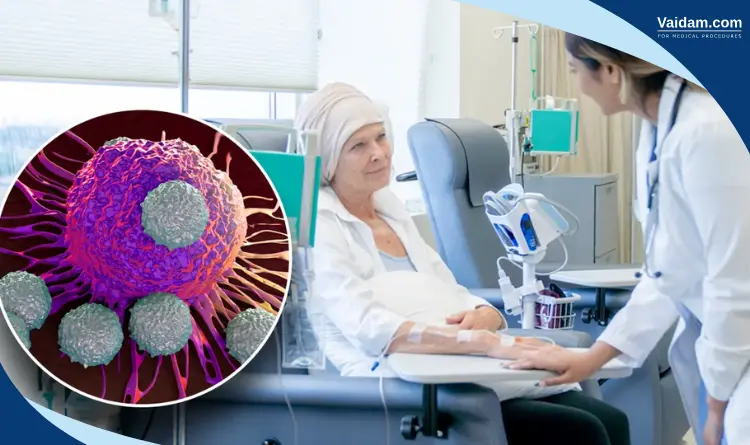
Cancer remains a significant global health challenge, with millions diagnosed each year. While many countries face challenges with late-stage diagnoses and limited treatments, Germany stands out as a beacon of hope.
Known for cutting-edge research, advanced medical technology, and personalised treatment plans, Germany ranks among the top in cancer survival rates. It hosts some of the world's leading cancer hospitals and specialists, providing comprehensive, state-of-the-art care.
Do You Know?
According to the Organisation for Economic Co-operation and Development (OECD), Germany spends about 11.2% of its GDP on healthcare, a large portion of which is dedicated to cancer treatment and research, making it a global leader in oncology.
Why is Germany a Global Leader in Cancer Treatment?
Germany is a premier destination for cancer treatment, renowned for its advanced healthcare system and innovative research. Here are key reasons why Germany is a leader in cancer care:
1. Advanced Research and Innovative Treatments
Home to renowned institutions like the German Cancer Research Center (DKFZ) and the German Cancer Consortium (DKTK), Germany leads in clinical trials and the development of novel therapies.
German oncologists are recognised worldwide for their expertise in immunotherapy, particularly CAR-T cell therapy, which has shown remarkable success rates in treating certain leukaemias and lymphomas. Technologies such as stem cell therapy, dendritic cell therapy, and LU-177 are also at the forefront of precise cancer treatment.
2. High Survival Rates
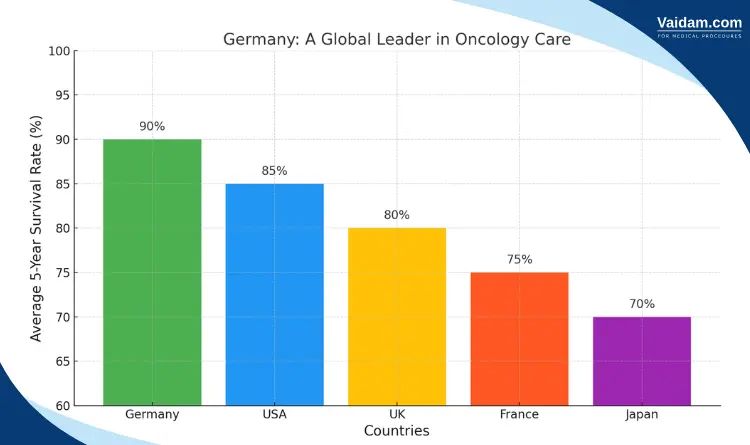
According to the European Cancer Information System (ECIS), Germany boasts impressive cancer survival rates, with five-year survival rates for breast cancer at 86.5%, prostate cancer at 91.2%, and colorectal cancer at 63.7%.
These statistics reflect the success of German cancer hospitals in diagnosing and treating cancers early and providing highly effective, personalised treatment plans.
Here's a graph illustrating Germany as a global leader in oncology care. It showcases the average 5-year survival rates for major cancers compared to other countries.
3. Personalised Cancer Treatment
German oncologists prioritise personalised treatment plans. They use genetic profiling and molecular diagnostics to tailor therapies to individual patients, enhancing the effectiveness of their care. This approach has significantly improved patient outcomes and quality of life.
Germany is at the forefront of cancer treatment, with a strong focus on personalised medicine and innovative therapies. Our researchers are making significant strides in understanding the molecular mechanisms of cancer, leading to more effective and targeted treatments.
Dr. Ulrich Keilholz, Director of the Charité Comprehensive Cancer Center
What Are the Advanced Cancer Treatment in Germany?
Germany is recognised for its cutting-edge cancer treatment options. It blends traditional methods with innovative approaches to provide comprehensive care for patients. The country's healthcare system emphasises advanced therapies aimed at improving patient outcomes.
Here are some of the most prominent advanced cancer treatments available in Germany.
1. Stem Cell Therapy
Stem cell therapy involves replacing damaged bone marrow with healthy stem cells. These stem cells can come from the patient's own body (an autologous transplant) or a compatible donor (an allogeneic transplant).
This therapy helps the body produce healthy blood cells again by restoring the bone marrow and strengthening the immune system, which is essential for fighting cancer.
2. Dendritic Cell Therapy
Dendritic cell therapy is a groundbreaking approach to cancer immunotherapy. In this treatment, doctors collect a patient's dendritic cells, which are a type of immune cell. These cells are then exposed to cancer proteins (antigens) in a lab.
Once the dendritic cells are activated, they are injected back into the patient's body. This process helps the immune system recognise and attack cancer cells more effectively. Currently, this therapy is approved for prostate cancer and is being studied for various other cancers, making it a promising option for personalised treatment.
3. Infusion Therapy
Infusion therapy allows for the direct delivery of medications and nutrients into a patient's bloodstream. This is especially helpful for patients who have difficulty swallowing pills or need large doses of chemotherapy.
In Germany, medications like Regeneresen, Curcumin, and GcMAF are often given through this method. By delivering drugs directly into the bloodstream, infusion therapy ensures that they work more effectively and quickly, improving treatment outcomes.
4. High-Intensity Focused Ultrasound (HIFU)
High-intensity focused Ultrasound (HIFU) is a non-invasive treatment that uses focused ultrasound waves to generate heat and destroy cancerous tissues. This method is beneficial for treating prostate cancer and uterine fibroids.
HIFU targets tumours precisely while causing minimal damage to surrounding healthy tissue. Compared to traditional surgeries, patients can recover more quickly with fewer complications.
5. Prostate-Specific Membrane Antigen (PSMA) Therapy
PSMA therapy is a targeted treatment for prostate cancer. It uses special compounds that are labelled with radiation to attach to the Prostate-Specific Membrane Antigen (PSMA). This protein is often found in large amounts on prostate cancer cells.
Two types of PSMA therapy, Ac-225 and Lu-177, have shown promising results in treating advanced prostate cancer. This targeted approach delivers treatment directly to cancer cells while sparing healthy tissues.
6. Transarterial Chemoembolization (TACE)
Transarterial Chemoembolization (TACE) is a minimally invasive procedure primarily used for liver cancer. In TACE, high doses of chemotherapy are delivered directly to the tumour through the hepatic artery while also blocking the blood supply to the tumour.
This technique confines the treatment to the tumour area, enhancing the effectiveness of the chemotherapy and reducing side effects on the rest of the body. TACE is especially valuable for patients with tumours that cannot be surgically removed.
7. Extracorporeal Hemoperfusion (EHP)
Extracorporeal Hemoperfusion (EHP) is an innovative therapy that combines hyperthermia (raising the body's temperature), blood purification, and oxygenation. This treatment aims to make chemotherapy more effective while reducing its side effects. By improving the overall condition of the patient, EHP helps manage symptoms better and enhances the quality of life for those undergoing cancer treatment.
What is the Cost of Cancer Treatment in Germany?
The cost of cancer treatment in Germany typically ranges from $25,500 to $80,000, varying based on the complexity of each case, the specific treatment plan, and the patient's needs. This investment is well-justified by the high survival rates, particularly for stage 4 cancers. For instance, metastatic breast cancer has a 5-year survival rate of around 30%, while colorectal cancer patients see about 14%.
Germany's cutting-edge therapies, such as immunotherapy and targeted treatments, combined with a personalised, multidisciplinary approach, ensure comprehensive care. From diagnostics to follow-up, this level of expertise significantly improves outcomes, making the cost a worthwhile investment for long-term survival and quality care.
How Can Vaidam Help You in Getting Cancer Treatment in Germany?

We understand that the process of obtaining cancer treatment in Germany can bring uncertainty and anxiety about the journey ahead.
Patients and their families often wonder: Will the treatment work? What side effects should I expect? How will I manage the physical and emotional challenges ahead? Don't worry.
Vaidam is here to help you find leading cancer treatment centres in Germany, along with additional services, including:
- Expert opinions from leading cancer specialists in Germany
- Detailed explanations of treatment options and expected outcomes
- Comprehensive breakdown of treatment costs
- Travel and accommodation arrangements
- Scheduling appointments with healthcare providers
- Language interpretation services, if needed
- Post-treatment follow-ups
Vaidam Health, a globally recognised healthcare assistance company, is committed to facilitating your cancer treatment while ensuring that the process remains as affordable and manageable as possible. With our support, you can focus on your treatment while we handle the logistics of your medical journey to Germany.
Frequently Asked Questions About Cancer Treatment in Germany
1. Is Germany good for cancer treatment?
Yes, Germany is considered one of the top destinations for cancer treatment globally. It has a robust healthcare system, renowned for advanced cancer care and cutting-edge technology.
Hospitals like Charité and University Hospital Heidelberg are recognised for their specialised cancer centres and high success rates. As of 2023, Germany is home to over 1,200 active clinical trials, providing patients access to innovative treatments and therapies.
2. How much does it cost to get cancer treatment in Germany?
Cancer treatment in Germany costs $25,500 to $80,000, depending on the complexity. However, high survival rates, advanced therapies, and personalised care make this investment worthwhile, offering improved outcomes and enhanced quality of life.
3. Is cancer treatment in Germany free?
Cancer treatment in Germany is not entirely free. Patients with statutory health insurance usually have most treatments covered, but this applies mainly to residents. For international patients or those without insurance, costs can be substantial, and they may need to pay out-of-pocket for treatment. It's advisable to check with specific hospitals regarding payment options and financial assistance programs.
4. Which cancer is most common in Germany?
Breast cancer is the most frequently diagnosed cancer among women in Germany, with approximately 69,000 new cases each year. Prostate cancer is the most common cancer among men, with about 58,000 new cases annually. Additionally, lung cancer accounts for around 50,000 new cases per year, highlighting its significant impact on public health.
5. What is the latest treatment for cancer in Germany?
Germany's latest cancer treatments include personalised immunotherapies, proton beam therapy for precise radiation, and advanced targeted therapies like monoclonal antibodies and kinase inhibitors for various cancers.



 Chat
Chat