

Globally renowned Interventional Cardiologist, Dr. Rajeev Lochan is Principal Consultant at Al Zahra Hospital, Dubai, United Arab Emirates. He is specialized in Complex coronary & peripheral vascular intervention. Interventional cardiology is the subspecialty of cardiology that uses specialized catheter-based techniques to diagnose and treat coronary artery disease, vascular disease, structural heart disease, and congenital heart defects.
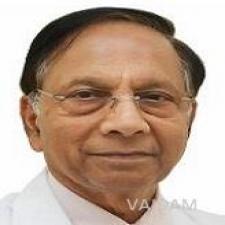
He has more than 30 years of extensive experience. His area of clinical expertise lies in Primary PCI (Percutaneous Coronary Interventions) 24/7 for the urgent management of Heart attacks, Complex coronary & Peripheral vascular interventions, Pacemaker implants & follow up and Reprogramming (Single, Dual, and Triple chamber), ICD/ CRT device Implantation and follow up reprogramming), Non-Invasive Procedures, etc.
Dr. Rajeev has worked earlier in some of the prestigious hospitals such as Medeor Hospital, Indraprastha Apollo Hospitals, Batra Hospital, New Delhi. He is a member of the Indian College of Cardiology, Cardiological Society of India (EC), UAE, General Medical Council. Also, he was the Ex. President of the Indian College of Cardiology and Ex-Member of the Editorial Board of Cardiology Society of India. Moreover, he has published in both national and international publications. He is also actively invited as a guest speaker in scientific conferences, meetings, CDE's and worldwide conferences to talk about Pacemaker implants.
What is Percutaneous Coronary Intervention (PCI)?
Percutaneous coronary intervention (PCI), also known as coronary angioplasty, is a nonsurgical technique for the treatment of obstructive coronary artery disease, for diseases like unstable angina, acute myocardial infarction (MI), and multivessel coronary artery disease (CAD)
Why do we need PCI?
PCI improves blood flow in arteries, thus reduces heart-related chest pain (angina), makes patient feel better and enhances the patient’s ability to be active. PCI is usually scheduled ahead of the time.
Types of Percutaneous Coronary Interventions
- Balloon angioplasty: In some cases catheters feature tiny, folded balloons on their tips. When doctor founds a blocked artery, the balloon is inflated, opening the artery. The balloon is then deflated and removed.
- Angioplasty with stent: In addition to balloon treatment, cardiologists generally place a stent, a tiny mesh tube that we expand and leave behind to keep the artery open. Most stents now come with coatings that slowly release special drugs. The drugs decrease scar tissue buildup, reducing the need for further treatment. Dissolvable stents are a new option that does not leave metal in the body permanently.
- Laser angioplasty: Catheters which are equipped with a laser, allowing cardiologists to vaporize arterial blockages. Though most patients will not need laser angioplasty.
- Rotational atherectomy: cardiologists can deploy a special catheter-based tool to drill out calcium deposits in the arteries. Atherectomy is not commonly used since other angioplasty tools have improved, but it can be invaluable in some cases.
- CTO (Chronic Total Occlusions): In some cases vessels have been found totally blocked for a course of time and those are more difficult to unblock. In such cases advance techniques and devices are utilized, the interventional cardiologists are prepared to fix the most complex coronary artery blockages.
Percutaneous Coronary Interventions Treatment Associated Risks
As with any treatment involving the heart, complications may arise, though it rarely causes death. The patients mortality rate during angioplasty is 1.2% which is negligible and dependent upon various factors and medical history of the patient. With some patients chest pain may appear during angioplasty because the balloon partially blocks off the blood supply to the heart.
The risk of complications is higher in:
- Patients with more than 65 years pf age and older
- Patients with have kidney disease or diabetes
- Women in particular are at higher risk
- Patients who have poor pumping function in their hearts
- Patients who have extensive heart disease and blockages
Dr. Rajeev Lochan is contributing this noble service from last 30 years. He handles patients who are in critical condition and carry out emergency treatment. During this long span of time, he has saved thousands of lives. He is currently located at Al Zahra Hospital Dubai, United Arab Emirates. Al Zahra Hospital is Dubai’s most reputed multispecialty hospital. One can find best of treatment at this hospital with the assistance and consultantation under the medical specialists like Dr. Rajeev Lochan. Consult for him for all heart related complications.


 Chat
Chat