

Cost of RIRS in Chennai
Our Services for RIRS in Chennai
Transparent, professional support—without the hassles.
Book Doctor Appointment
Choose a specialist and schedule a convenient consultation.
Video or In-person Consultation
Consult remotely or meet your doctor directly at the hospital.
Compare Cost Estimates
Review transparent estimates from suitable hospitals.
Hospitalisation Support
Get coordinated assistance throughout your hospital stay.
 WhatsApp Us
Top Doctors in Chennai
Recommended Doctors for RIRS





Top Hospitals in Chennai
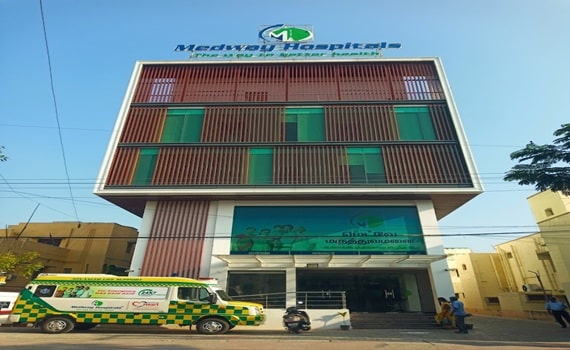
Recommended Hospitals for RIRS






Success Rate
Everything You Need to Know About RIRS: Q&A
Before the Procedure · 5 Questions
Retrograde Intrarenal surgery is a method by which you can see a tube called as fiberoptic endoscope which is passed during surgery to kidney, the fiber optic device is flexible and it makes it easy to bend with renal system so that it can easily passes to kidney and ureter. The tube is moved to the ureter to collect urine and also helps in visualizing the different parts of kidney. After which a thin laser fiber is passed through the stone.
The procedure is very less invasive it is best treated in people having kidney stones and patient having large size kidney stones and bleeding disorders in kidneys.
Yes, RIRS surgery is very safe and effective surgery for patients having kidney disease; this procedure can get high SFR with low morbidities and has not affected the renal function.
There is no pain after surgery and the recovery is much faster. Minimal bleeding is seen after surgery and there is no damage to the renal tissue. This procedure is being considered safe retrograde endoscope procedure for treating renal calculi.
You should go for RIRS surgery because it doesn’t cause any damage to kidneys; there is no damage to kidneys and sexual life. Stone is being easily removed within one hour.
During the Procedure · 5 Questions
RIRS procedure takes around 85 minutes to perform the stone fragments are easily removed by holium laser.
RIRS surgery can only be done under general anaesthesia, there is not any evidence which has shown that it can be performed under spinal anaesthesia.
This surgery is being performed by a urologist using flexible ureteroscopy and laser, there is no need to make any kind of cut inside the kidney the instrument is send through urethra and into the kidney.
You should get all your health checkup done two week before the surgery. On the day before the surgery you should keep fast for about 4 to 6 hours.
Urologist passes and endoscope through the urethera to the part of kidney where urine is being collected. The scope is removed at the upward end of urinary tract and within kidney or intra renal. When the scope is being passed into the kidney through bladder the kidney stones are identified and balsterd easily.
Post the Procedure · 3 Questions
After the procedure you will be taken to the recovery room and a urinary catheter will be inserted into the urethera for reducing pain and difficulty during urination. You will be advised bed rest for 24 hours after receiving spinal anaesthesia. You are advised to drink plenty of water so that you can pass around 2.5 litres of urine everyday
The next day after the surgery you will be discharged if you are feeling better in some case you have to stay in hospital for more about five days.
The procedure is very quick as compared to traditional surgery, patient will not experience any pain after surgery and they recover much faster, the bleeding is very less and renal tissue is free of damage.
 Chat
Chat