

Cost of Bronchoscopy in Bangkok
Our Services for Bronchoscopy in Bangkok
Transparent, professional support—without the hassles.
Book Doctor Appointment
Choose a specialist and schedule a convenient consultation.
Video or In-person Consultation
Consult remotely or meet your doctor directly at the hospital.
Compare Cost Estimates
Review transparent estimates from suitable hospitals.
Hospitalisation Support
Get coordinated assistance throughout your hospital stay.
 WhatsApp Us
Top Doctors in Bangkok
Recommended Doctors for Bronchoscopy

Top Hospitals in Bangkok
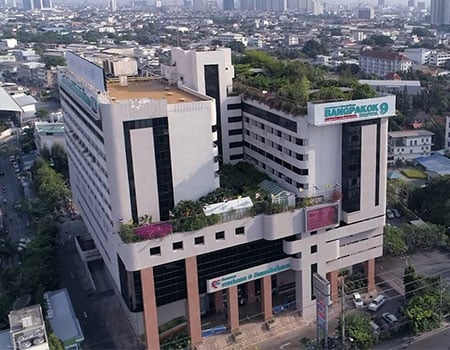
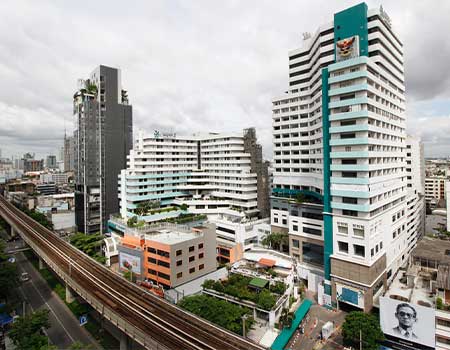
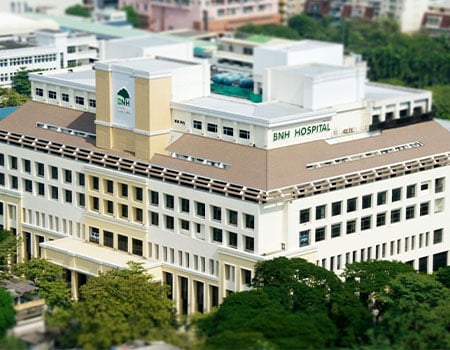
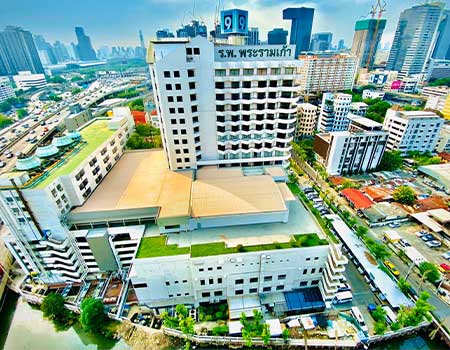
Recommended Hospitals for Bronchoscopy


Success Rate
Everything You Need to Know About Bronchoscopy: Q&A
Before the Procedure · 5 Questions
Bromchoscopy is the procedure in which the doctor looks at your lung disorders. In this procedure a thin tube called as bronchoscope is being passed through your nose or mouth and then from your throat to your lungs.
In bronchoscopy the doctor can view all the structures which forms the respiratory system such as your larynx, trachea and the smaller airways of the lungs called as bronchi and bronchioles.
A bronchoscopy can be used to diagnose a lung disease, a tumor, a chronic cough, an infection. The procedure can also be used to detect the source of pulmonary bleeding or identify foreign bodies in young children.
Advanced forms of imaging are sometimes used to conduct a bronchoscopy. In virtual the bronchoscopy a CT scan is being used to see the airways in more detail. In endobronchial ultrasound a probe is attached to bronchoscope to check for airways and in fluorescence bronchoscopy a fluorescent light is attached to the bronchoscope to see the inner side of the lungs.
Common reasons for needing bronchoscopy are a persistent cough, infection or something unusual seen on a chest X-ray or other test. This can also be done to obtain samples of mucus or tissues or to remove foreign bodies to provide treatment for lung problems.
- Identification of a lung infection
- Biopsy of tissue from the lung
- Removal of mucus, a foreign body, or other obstruction in the airways or lungs, such as a tumor
- Placement of a small tube to hold open an airway (stent)
Treatment of a lung problem (interventional bronchoscopy
During the Procedure · 5 Questions
Bronchoscopy is usually done in a procedure room in a clinic or in a hospital operating room. The entire procedure takes about four hours. Bronchoscopy itself usually lasts about 30 to 60 minutes.
During bronchoscopy, the bronchoscope is placed in your nose or mouth. The bronchoscope has a light and a very small camera at its tip that displays pictures on a monitor which helps the doctor in guidance. The bronchoscope is advanced slowly down the back of your throat, through the vocal cords and into the airways. It may feel uncomfortable, but it shouldn't hurt. Samples of tissue and fluid may be taken and procedures may be performed using devices passed through the bronchoscope
After one to three days of the procedure you will get to know about the result. The doctor will then decide what treatment is needed and what procedure is to be followed. If biopsy was taken during bronchoscopy then it is needed to be reviewed by a pathologist.
Bronchoscopy is not painful, the bronchoscope is passed through the nose of your mouth, down the back of your throat and through the windpipe and then into the bronchi. The fibre-optics allow light to shine around bends in the bronchoscope and so the doctor can see clearly inside your airways.
A bronchoscopy is relatively quick, lasting 30 to 45 minutes. Because you’ll be sedated, you’ll rest at the hospital for a couple of hours until you feel more awake and the numbness in your throat wears off.
Post the Procedure · 3 Questions
Complications from bronchoscopy are uncommon and usually minor, although they are rarely severe. Some of the complications of bronchoscopy are bleeding, collapsed lung and fever.
You'll be monitored for several hours after bronchoscopy. Your mouth and throat will probably be numb for a couple of hours. You won't be allowed to eat or drink until the numbness wears off. This helps keep food and liquids from entering your airways and lungs.
You should contact your doctor if you have fever for more than 24 hours, chest pain increasing day by day, difficulty in breathing, coughing few tablespoon of blood.
 Chat
Chat